

Tag: piano
-
PROGRAM NOTES: JEREMY DENK
Johann Sebastian Bach English Suite No. 3 in G Minor, BWV 808 Bach’s keyboard suites are a remarkable amalgam of the florid keyboard idiom of the French, the lyrical gift for vocal melody of the Italians, and the sober contrapuntal rigour of his fellow Germans. The suites which posthumously (and illogically) came to be labelled…
-
PROGRAM NOTES: MAXIMILIAN HORNUNG & BENJAMIN ENGELI
Robert Schumann Fünf Stücke im Volkston, Op. 102 Long before Martha Stewart made middle-class home furnishings a “thing,” the Biedermeier period (1815-1848) ushered in a bourgeois age of cozy home interiors that celebrated domestic family life and gave music a prominent place within it. Biedermeier Europe enjoyed the blessings of peace after the defeat of…
-
PROGRAM NOTES: PAUL LEWIS
Beethoven’s Late Piano Sonatas If ever a composer were to be remembered as going out swinging, that composer would be Beethoven. As ‘sunset’ periods go, the blaze of glory that the late piano sonatas and quartets, the Diabelli Variations, the Missa Solemnis and Ninth Symphony lit up in the historical firmament can still be felt…
-
PROGRAM NOTES: IAN BOSTRIDGE & WENWEN DU
Franz Schubert Winterreise It is a fact of musical life that there are commonly accepted ‘right’ ways (and even more ‘wrong’ ways) of performing the great works of past. These works arrive on our music stands embedded with notions of ‘stylistic correctness’ that guide our first attempts at interpretation, serving the same function as the lines…
-

PROGRAM NOTES: YUN-CHIN ZHOU
Domenico Scarlatti Three Sonatas The 550-odd sonatas of Domenico Scarlatti are perhaps the most successful works to migrate from the harpsichord to the modern grand piano. Their transparent texture of simple two- and three-part keyboard writing has one foot in the imitative counterpoint of the Baroque while anticipating the Classical era of Haydn and Mozart…
-
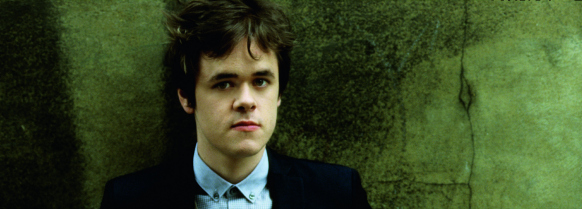
PROGRAM NOTES: BENJAMIN GROSVENOR
Jean-Philippe Rameau Gavotte and Variations in A minor The modern pianist seeking to play the Baroque harpsichord repertoire faces many obstacles, starting with the friendly fire of his own trusty Steinway itself, so different in sound from the perky little plucked-string sound box for which this music was originally written. A note on the harpsichord…
-

PROGRAM NOTES: SIR ANDRÁS SCHIFF
Franz Joseph Haydn Sonata No. 60 in C major Hob. XV1:50 Haydn’s last three piano sonatas, Nos. 60 to 62 (Hob. XVI:50-52), were written during the composer’s second trip to London of 1794-1795. All three were composed with a specific dedicatee in mind: the female keyboard virtuoso Therese Jansen Bartolozzi (1770-1843), a student of Clementi…
-
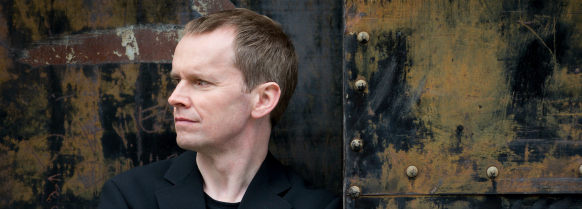
PROGRAM NOTES: STEVEN OSBORNE
Ludwig van Beethoven Sonata in E minor, Op. 90 The use of the piano sonata in marriage counselling has not found wide adoption in the profession since Beethoven first introduced the practice with his Sonata in E minor Op. 90. The curious story associated this sonata is as follows. Beethoven’s biographer Anton Schindler relates that…
-
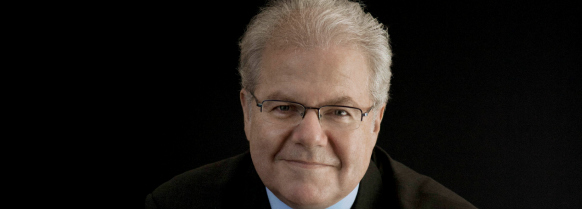
PROGRAM NOTES: EMANUEL AX
Georges Bizet Variations Chromatiques de concert For those that like to feather-dust humming the habanera from Carmen with a rose clenched between their teeth might be surprised to learn that Georges Bizet was not only an opera composer, but also a pianist. Anecdotal accounts of the period reveal that the keyboard skills of Georges Bizet…
-

PROGRAM NOTES: PAVEL KOLESNIKOV
Wolfgang Amadeus Mozart Fantasy in C minor K. 475 The year 1785 was a good one for Mozart. In the words of musicologist John Irving, he had become something of a ‘hot property’ in Vienna, enjoying considerable success both as a published composer and as a performing musician. But Mozart had also acquired a reputation…
-
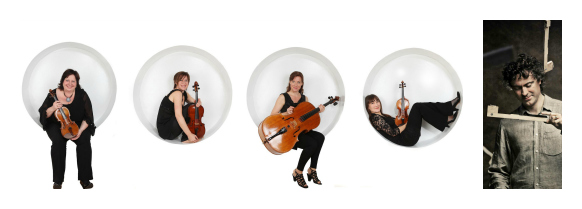
PROGRAM NOTES: THE VERTAVO STRING QUARTET & PAUL LEWIS
Wolfgang Amadeus Mozart Piano Concerto No. 12 in A major K. 414 Mozart’s twelfth piano concerto was one of three composed in 1782 for sale to the Viennese public by advance subscription, the 18th-century equivalent of ‘crowd-sourcing’. A major selling point of these ‘subscription’ concertos (K. 413, 414 & 415) was that they were composed…
-
PROGRAM NOTES: LUCA PISARONI & WOLFRAM RIEGER
Wolfgang Amadeus Mozart Four Songs The earliest German lieder we have in the concert repertoire come from the more than 30 works that Mozart wrote between 1768 (at the age of twelve!) and his death in 1791. His mature songs reflect his skill as an opera composer in their sensitive treatment of the text, bolstered by…
-

DO YOU REMEMBER YOUR VERY FIRST MUSICAL MEMORY?
When I was a boy my father would sing me to sleep every night. And when he went away on business trips, my mother sang to me at night instead. Now, my mother, whom I love dearly (98 and going strong!) has many wonderful traits and abilities, including playing the piano. But singing perfectly in…
-
PROGRAM NOTES: CHRISTIAN GERHAHER & GEROLD HUBER
By Christian Gerhaher This programme of poems by Johann Wolfgang von Goethe set to music by Franz Schubert and Wolfgang Rihm was conceived as a tribute to the eight great poetic hymns written during the poet’s Sturm und Drang period of the 1770s and 1780s. I had always regretted that Schubert had set only three…
-
PROGRAM NOTES: CHARLIE ALBRIGHT
Franz Schubert Impromptus Op. 90, Nos. 1-4 The impromptu is just one of a number of small-scale instrumental genres arising in the early 19th century, known under the collective title of “character pieces”. Cultivated by composers of the Romantic era, these pieces present a simple musical idea in an intimate lyrical style with the…
-
PROGRAM NOTES: DANIEL MÜLLER-SCHOTT & SIMON TRPČESKI
Ludwig van Beethoven Sonata for cello & piano in C major, Op. 102, No. 1 Those who think of sonata form as a well-organized dinner plate – with the red meat in one corner, the mashed potatoes stationed opposite, and peas or broccoli distributed neatly over the remaining space – might be forgiven for thinking…
-
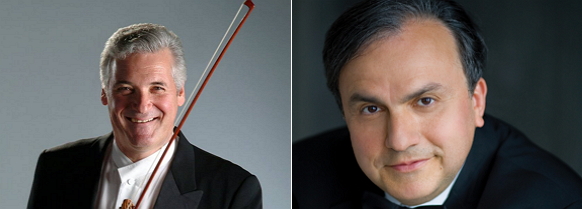
PROGRAM NOTES: PINCHAS ZUKERMAN & YEFIM BRONFMAN
Franz Schubert Sonatina for violin & piano in A minor D. 385 It humbles me to think, paraphrasing Tom Lehrer, that when Schubert was my age, he had already been dead for several decades. Lest I forget, there are his first three sonatas for violin and piano, which he composed in a sprint of creative…
-
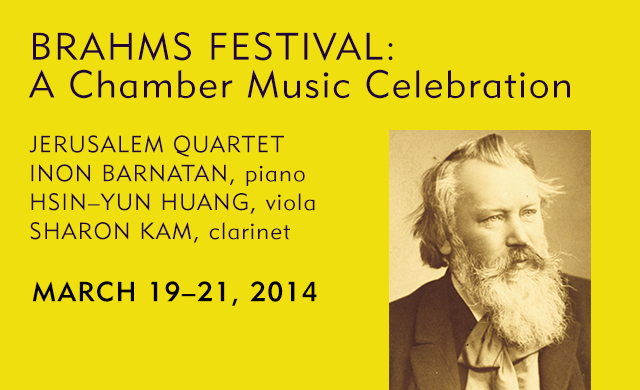
PROGRAM NOTES: BRAHMS FESTIVAL
CONCERT #1 Johannes Brahms String Quartet in C minor, Op. 51, No. 1 If there was one great figure in European music that Brahms revered more than any other, that figure was Ludwig van Beethoven. With the Great Master’s bust looking impassively down on him from the wall of his Vienna apartment, feeling behind him…
-
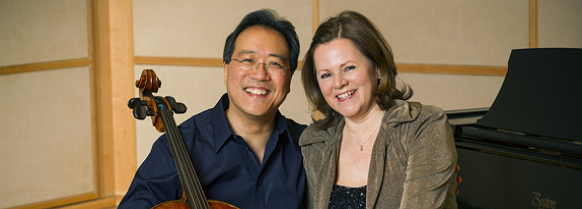
PROGRAM NOTES: YO-YO MA & KATHRYN STOTT
Igor Stravinsky Suite Italienne At the end of the Great War Igor Stravinsky underwent a radical shift in his compositional techniques and aesthetic aims. Gone were the gargantuan orchestras that had performed the lush, colorful scores of his pre-War ballets Firebird and Petrushka. Gone, as well, the dense chord structures and revolutionary rhythmic tumult that…
-

PROGRAM NOTES: MURRAY PERAHIA
Johann Sebastian Bach: French Suite No. 4 in E flat major, BWV 815 Bach composed suites for keyboard, for various solo chamber instruments, and for full orchestra, each comprising a varied and aesthetically balanced collection of dance movements written in the fashionable style of his day. The harmonic task given to each two-section dance is…
-
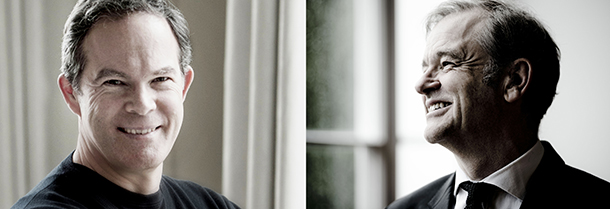
PROGRAM NOTES: GERALD FINLEY & JULIUS DRAKE
Franz Schubert: Die Winterreise The art songs of Franz Schubert lie at the foundation of the lied genre itself, and at the pinnacle of Schubert’s lieder output stands Die Winterreise, a song cycle remarkable for its vivid musical portraits of the human heart smarting from the pains of love lost, and stoically resigned to the…