

Author: VRS
-
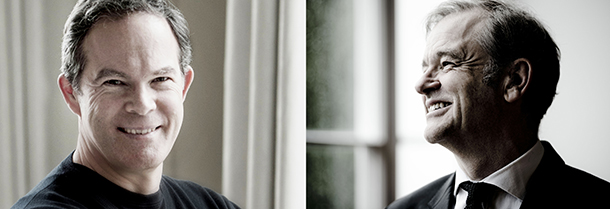
PROGRAM NOTES: GERALD FINLEY & JULIUS DRAKE
Franz Schubert: Die Winterreise The art songs of Franz Schubert lie at the foundation of the lied genre itself, and at the pinnacle of Schubert’s lieder output stands Die Winterreise, a song cycle remarkable for its vivid musical portraits of the human heart smarting from the pains of love lost, and stoically resigned to the…
-

PROGRAM NOTES: AVI AVITAL
Avi Avital: Kedma “To open the concert, I have chosen to perform a composition- improvisation of my own. Unlike a composer’s relationship to an instrument and to a musical form, the performer’s relationship to his instrument, as in this case, is expressed in a frequent dialogue to “get to know” each other better. This improvisation,…
-
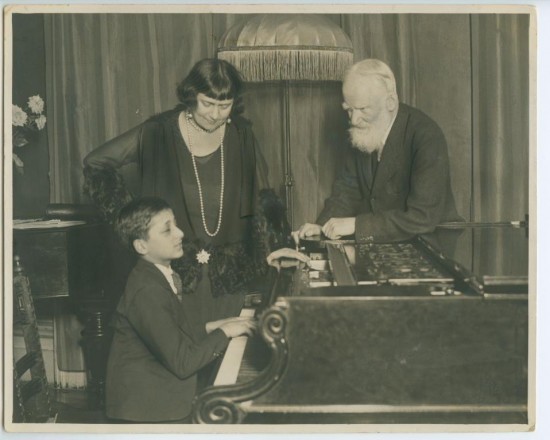
NELSON MANDELA’S CLASSICAL PIANIST
The world is a poorer place for Nelson Mandela’s passing. Over the last few days I have read many articles about him and about my native South Africa during the dark days of apartheid. One item, in particular, surprised me. The piece below, by British journalist Norman Lebrecht, was posted on his daily blog…
-

PROGRAM NOTES: KUOK-WAI LIO
Leoš Janáček: In the Mists Janáček’s four-movement piano cycle from 1912 presents us with intimate, personal and emotionally immediate music that stands stylistically on the border between eastern and western Europe. Its sound world is that of the fiddles and cimbalom (hammered dulcimer) of Moravian folk music. Equally folk-like is its use of small melodic…
-

PROGRAM NOTES: BENEDETTO LUPO
Johannes Brahms: Three Intermezzi, Op. 117 The three Intermezzi Op.117 are, together with the piano pieces of Op. 116, 118 and 119, collectively the last Brahms wrote for solo piano, and are among his very last compositions. Only three more opus numbers followed, and they involved the keyboard as well. In a way, it was…
-
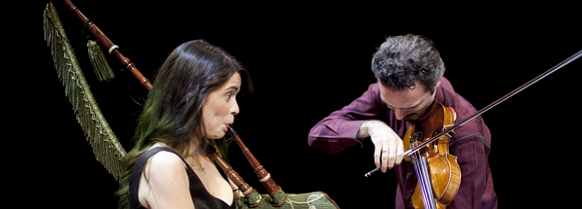
PROGRAM NOTES: THE SILK ROAD ENSEMBLE
For nearly two thousand years (ending in the 14th century), the historical Silk Road, a series of land and sea trade routes, crisscrossed Eurasia, enabling the exchange of goods and innovations from Japan to the Mediterranean Sea. Over the centuries, many important scientific and technological innovations migrated to the West along the Silk Road,…
-

PROGRAM NOTES: VILDE FRANG
Felix Mendelssohn: Violin Sonata in F major Mendelssohn’s E minor Violin Concerto is such an established pillar of the standard repertory that it comes as a surprise to learn that this composer also wrote three sonatas for the instrument, although these are as obscure as the concerto is popular. The first, in F major,…
-

PROGRAM NOTES: BEATRICE RANA
Robert Schumann: Abegg Variations, Op. 1 Schumann’s Abegg Variations first appeared in November of 1831, but Schumann had completed it more than a year earlier, shortly after his twentieth birthday and before he had made the commitment to a life of music (he was still studying law in Heidelberg at the time). It is…
-
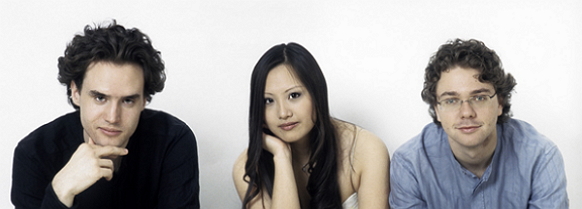
PROGRAM NOTES: SITKOVETSKY TRIO
Johannes Brahms: Piano Trio no. 3 in C minor, Op. 101 This is the last work Brahms wrote for the piano trio. It is a magnificent work in every respect, from the sharply etched melodies to the concision and masterly manner in which they are handled. It is also one of Brahms’s most compact…
-
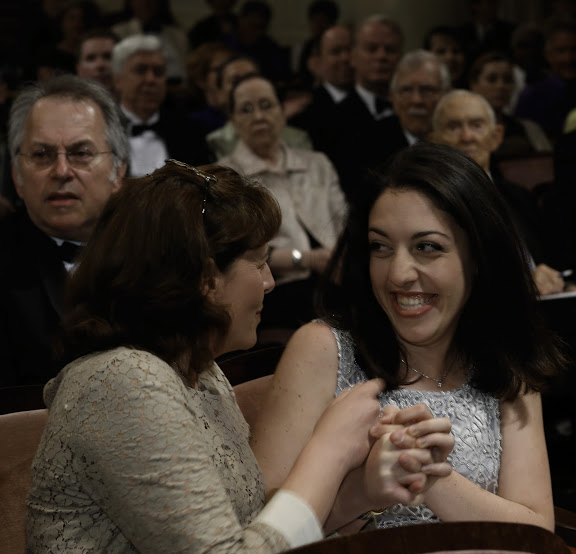
CAVORTING AT THE CLIBURN
I returned last Monday from a trip to the Van Cliburn International Piano Competition in Fort Worth, Texas with a prize winner and a cold! It has been twenty years since I’ve been to a Cliburn Competition and have decided that I’m not waiting another twenty years. The next competition is in four years and…