

Blog Type: Program Notes
-
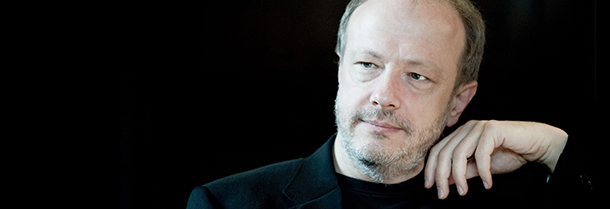
PROGRAM NOTES: MARC-ANDRÉ HAMELIN
Franz Liszt Hungarian Rhapsody No. 13 in A minor Liszt’s 19 Hungarian Rhapsodies pay tribute to the gypsy music of his native Hungary. Like an ancient insect trapped in amber, they encapsulate for posterity the dramatic, improvisatory performance style of the roving bands of Romani musicians that Liszt heard as a boy growing up in…
-

PROGRAM NOTES: NIKOLAJ ZNAIDER & ROBERT KULEK
Ludwig van Beethoven Sonata for Violin & Piano in G major Op. 30 No. 3 “Who are you, and what have you done with Ludwig van Beethoven?” Such is the question that Beethoven enthusiasts raised on the Pathétique Sonata, the Fifth Symphony, and the late quartets might wish to ask of the musician responsible for…
-

PROGRAM NOTES: TARA ERRAUGHT & JAMES BAILLIEU
Franz Liszt Victor Hugo Poems It may seem strange to think of Liszt as a song composer, so firmly is his name associated with 19th-century virtuoso pianism. But the extraordinary breadth of his musical sympathies is already clearly evident in the wide range of styles and moods in his piano compositions alone, from the bombast…
-

PROGRAM NOTES: SHEKU KANNEH-MASON & ISATA KANNEH-MASON
Gaspar Cassadó Suite for Solo Cello Gaspar Cassadó is hardly a household name, but he was one of the great cellists of the twentieth century, active as a performer, composer and transcriber for his instrument. Born in Barcelona in 1897, he was discovered at the age of nine by a young Catalan cellist just starting…
-

PROGRAM NOTES: PAUL LEWIS (CONCERT 1)
Franz Joseph Haydn Sonata in C major Hob. XV1:50 Haydn’s last three piano sonatas, Nos. 60 to 62 (Hob. XVI: 50-52), were written during the composer’s second trip to London in 1794-1795. All three were composed with a specific dedicatee in mind: the female keyboard virtuoso, Therese Jansen Bartolozzi (1770-1843), a student of Clementi that…
-

PROGRAM NOTES: ALBAN GERHARDT & STEVEN OSBORNE
Johann Sebastian Bach Cello Suite No. 2 in D minor BWV 1008 The instrumental suite, with its predictable allemande-courante-sarabande-gigue sequence of dances and its un-predictable addition of various galanteries (minuets, bourrées, gavottes, etc.), was a staple of the Baroque. Arising from neither of the period’s two great wellsprings of musical emotion – religious piety and…
-

PROGRAM NOTES: GEORGE LI
Franz Joseph Haydn Sonata in B minor Hob. XVI:32 It is not often that you catch the congenial, ever-chipper Haydn writing in a minor key. But minor keys were all the rage in the 1770s, the age of Sturm und Drang (storm and stress), an age when composers such as C. P. E. Bach sought to…
-

PROGRAM NOTES: ZHANG ZUO
Ludwig van Beethoven 32 Variations in C minor WoO 80 The theme that Beethoven chose for his 32 Variations in C minor (1806) has a Baroque feel to it, with its chaconne-like harmonic pattern in the left hand and sarabande-like second-beat emphasis in the right. This theme, however, is far from the characterless blank canvas…
-

PROGRAM NOTES: YEKWON SUNWOO
Franz Schubert Sonata in C minor D 958 Schubert’s unabashed admiration for Beethoven is vividly on display in the opening bars of his Sonata in C minor D 958, composed in September 1828, shortly before his death. Schubert had served as a pallbearer at Beethoven’s funeral the year before, and his own death from tertiary…
-

PROGRAM NOTES: THE VERONA QUARTET
Franz Joseph Haydn Quartet in B at major Op. 50 No. 1 The art music of Western Europe underwent a period of transition in the mid- 18th century as the thickly embroiled scores of the Baroque, with their long spun-out melodic lines and constant harmonic churn, gradually yielded to the clearer textures, symmetrical phrases and slower…
-

PROGRAM NOTES: BENJAMIN GROSVENOR
Robert Schumann Arabesque, Op. 18 In the autumn of 1838 Robert Schumann made a career decision. He would move from his native Leipzig to Vienna to find a publisher and a sympathetic public for his piano compositions. The public he hoped to attract in his year in the Austrian capital was a public of the…
-

PROGRAM NOTES: JAVIER PERIANES
Franz Schubert Piano Sonata in A Major D 664 The salubrious effects of country air on the mind and spirits of the vacationing composer are well known. Witness Schubert’s wonderfully relaxed and lyrical Sonata in A Major D 664 composed in 1819 during a summer sojourn in Steyr, a riverside provincial town set amid the…
-
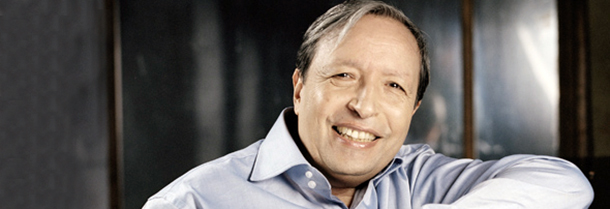
PROGRAM NOTES: MURRAY PERAHIA
Johann Sebastian Bach French Suite No. 6 in E Major BWV 817 The spirit of the dance can be felt across a wide range of Bach’s works, from the fugues of the Well-Tempered Clavier to the Mass in B minor. For Bach lovers with toes eager to tap, then, an entire suite of dance pieces…
-

PROGRAM NOTES: PAUL LEWIS
Johann Sebastian Bach Partita No. 1 in B flat major BWV 825 The partita, in late Baroque parlance, was just another name for a dance suite, a multi-movement work made up of the four canonical dance forms—allemande, courante, sarabande & gigue—with the occasional addition of a prelude at the beginning and optional fancier dances called…
-
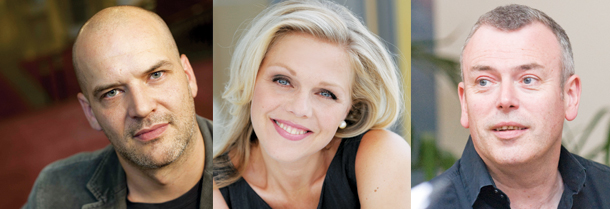
PROGRAM NOTES: FLORIAN BOESCH AND MIAH PERSSON
The Songs of Robert Schumann Robert Schumann was a composer steeped in literature. His compositions bear the dual imprint of both German musical and literary Romanticism. Literature was the family business, one might say, as his father, August Schumann, was both a publisher and a bookseller in Zwickau, Saxony, where the composer grew up. He…
-

PROGRAM NOTES: HARRIET KRIJGH & MAGDA AMARA
Felix Mendelssohn Cello Sonata No. 2 Op. 58 Mendelssohn’s second sonata for cello and piano reveals him as the Classical-Romantic hybrid that he was. An effortless practitioner of Classical etiquette in the construction of symmetrically balanced phrases, he eagerly took part in the Romantic age’s fascination with tonal colour and virtuoso keyboard writing. This sonata…
-

PROGRAM NOTES: BENJAMIN BEILMAN & YEKWON SUNWOO
Franz Schubert Sonata in A major D574 The adolescent Schubert was a busy young man indeed. Fresh from single-handedly inventing the 19th-century German art song (the Lied) at the tender age of 17, he subsequently developed a teenage crush on the violin which in the space of 18 months moved him to compose no less…
-

PROGRAM NOTES: DOVER QUARTET & AVI AVITAL
Sulkhan Tsintsadze Six Miniatures for String Quartet and Mandolin (arr. Ohan Ben-Ari) The Soviets promoted the ideal of music rooted in the traditions of their native soil and in this regard it would be hard to find a composer more congenial to Soviet ideals than Sulkhan Tsintsadze, one of the leading composers of the Soviet…
-
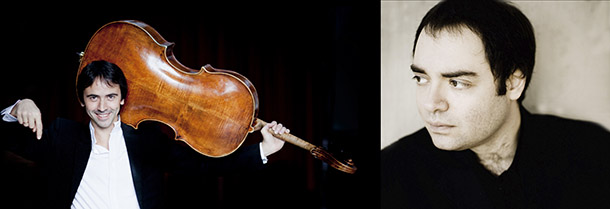
PROGRAM NOTES: WINTERLUDE – SUPER SUNDAY WITH JEAN-GUIHEN QUEYRAS & ALEXANDER MELNIKOV
Robert Schumann Fünf Stücke im Volkston Op. 102 The late 1840s saw Schumann take up “house music” in a big way. This does not mean that he began to DJ at raves, playing dance music with repetitive drum tracks and synthesized basslines. Rather, he had a productive period composing music specifically designed for the home…
-

PROGRAM NOTES: WINTERLUDE – SUPER SUNDAY WITH ALEXANDER MELNIKOV
Sergei Rachmaninoff Variations on a Theme of Chopin Op. 22 Chopin’s funereal, passacaglia-like Prelude in C minor from his collection of 24 Preludes Op. 28 provides the theme for Rachmaninoff’s first large-scale work for solo piano, his Variations on a Theme of Chopin, completed in 1903. Taking as his point of departure the prelude’s hymn-like…
-
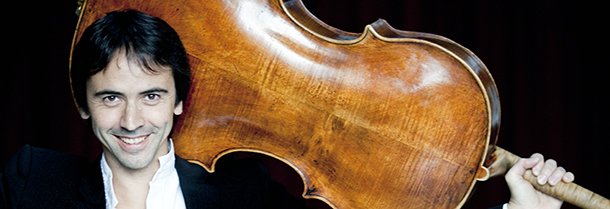
PROGRAM NOTES: WINTERLUDE – SUITE SATURDAY WITH JEAN-GUIHEN QUEYRAS
A Bit of History Few scholars doubt that Western music was better off for the release of a certain “Bach, Johann Sebastian” from the county jail in Weimar where he had languished, in unsuitable company, for the better part of a month in the autumn of 1717. Court organists can be a stroppy crew at…