

Blog Type: Program Notes
-

PROGRAM NOTES: YEVGENY SUDBIN
Domenico Scarlatti Sonata in B minor K 197 Sonata in G major K 455 “Probably one of the most outrageously individual compositional outputs of the Baroque era is to be found in the keyboard sonatas of Domenico Scarlatti,” writes Yevgeny Sudbin in the liner notes to his 2004 Scarlatti album. This may explain why Scarlatti’s…
-
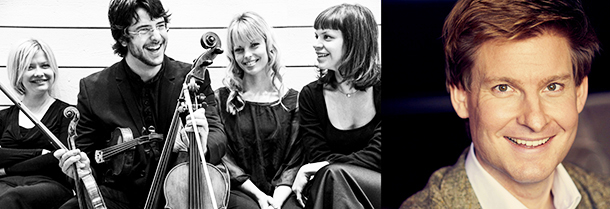
PROGRAM NOTES: CHIAROSCURO QUARTET AND KRISTIAN BEZUIDENHOUT
Franz SchubertString Quartet No. 14 in D minor (“Death & the Maiden”) Schubert’s “Death and the Maiden” string quartet is a sombre work, with all four of its movements set in a minor key. It takes its name from the composer’s lied Der Tod und das Mädchen (1817) that provides the theme for the quartet’s…
-

PROGRAM NOTES: PAUL LEWIS
Franz Joseph Haydn Sonata in E minor Hob. XVI:34 It is unusual to encounter a sonata in a minor key from “Papa” Haydn, a composer best known for his chipper disposition. But his Sonata in E minor likely dates from the late 1770s, which could explain its turbulent mood. The 1770s was the decade of…
-
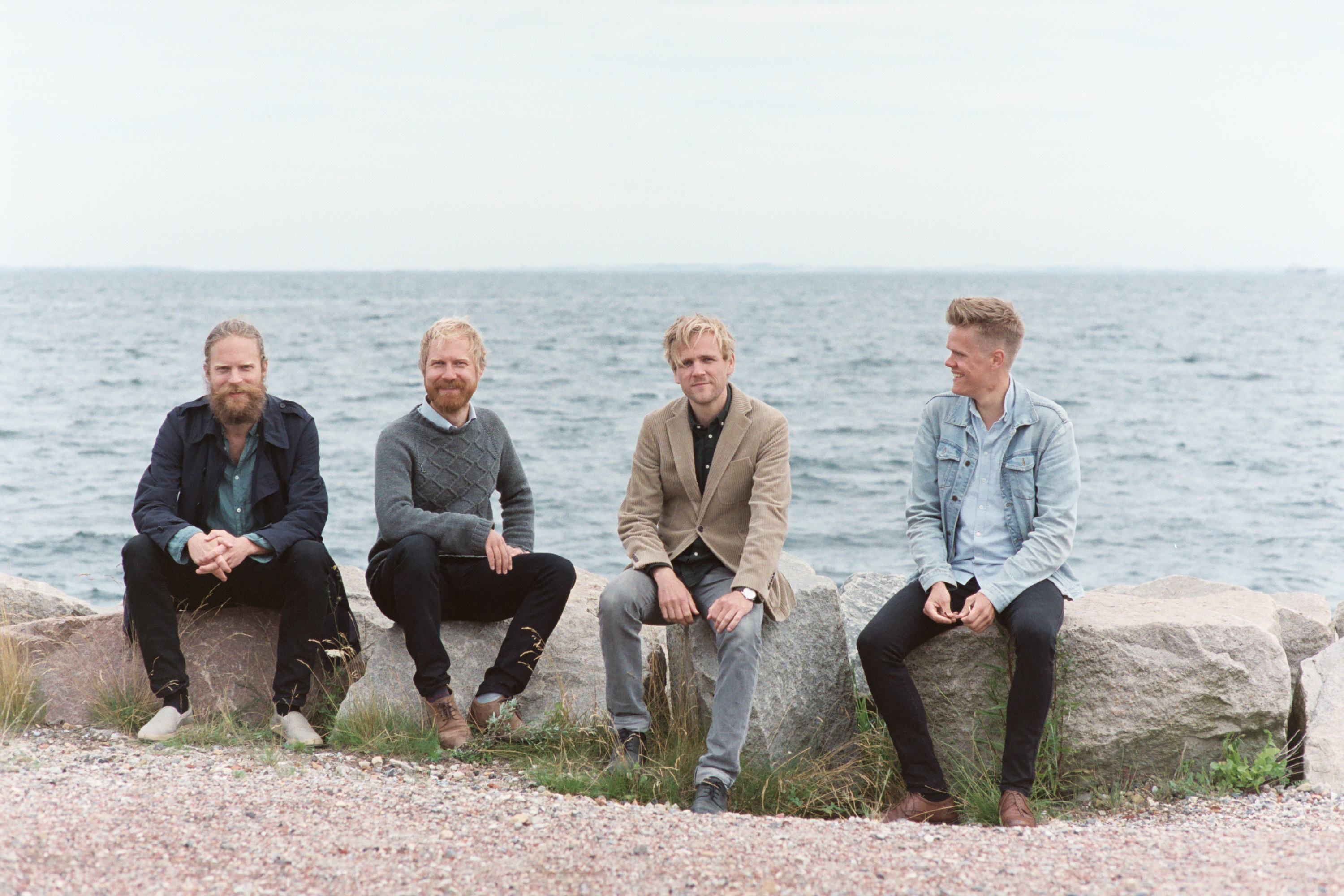
PROGRAM NOTES: DANISH STRING QUARTET
Ludwig van Beethoven String Quartet in C minor Op. 18 No. 4 In the Napoleonic era, when a Viennese aristocrat was thinking of entertaining friends at home, he might pop down to the local shop to pick up a six-pack—of string quartets, that is. The most refined form of home entertainment in Austria’s capital was…
-
PROGRAM NOTES: FILIPPO GORINI
Ludwig van Beethoven Sonata A flat major Op. 110 Beethoven’s penultimate piano sonata is remarkable for the utter simplicity of its musical ideas and the directness with which they are expressed. The most obvious late-period features of this work are an extremely wide keyboard range and a melding of slow movement and finale into a…
-
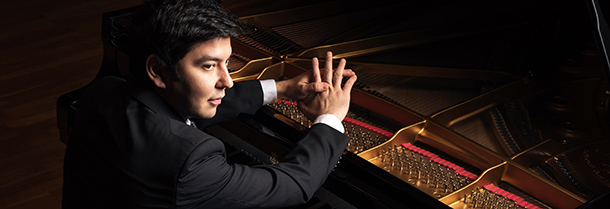
PROGRAM NOTES: BEHZOD ABDURAIMOV
Richard Wagner Isolde’s Liebestod arr. Franz Liszt The 19th century in Europe was an age in which psychological states went mainstream in the arts, becoming a particularly powerful stimulus for musical expression. A new genre, the nocturne, for example, captured that eerie feeling of being alone with one’s lyrical thoughts at a still point in…
-

PROGRAM NOTES: ZOLTÁN FEJÉRVÁRI
Robert Schumann Waldszenen Op. 82 It is not by chance that Carl Maria von Weber’s opera Der Freischütz, the founding work of German musical Romanticism, is set in a forest. Nor is it a coincidence that German Romantic poets from Ludwig Tieck to Joseph von Eichendorff and Heinrich Heine extolled the deep spiritual joys of…
-
PROGRAM NOTES: PAUL LEWIS
Johannes Brahms 7 Fantasies Op. 116 If the word fantasy implies improvisation and free association of thoughts, then the collection of three capricci and four intermezzi that Brahms published under the title Fantasien in 1892 are misnamed, as they are among the most densely expressive and tightly crafted miniatures to come from his pen. Some…
-
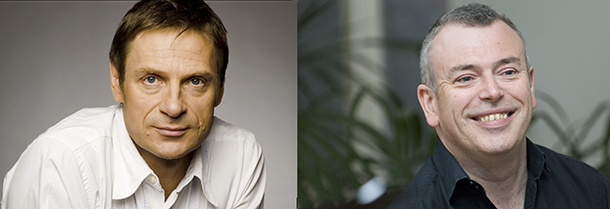
PROGRAM NOTES: SIR SIMON KEENLYSIDE
Johannes Brahms Songs from Opp. 6, 72, 86 & 96 It may be surprising to learn that while Brahms is universally revered as a giant of 19th-century instrumental music, he is often listed as one of the lesser composers of 19th-century art song. This may be because the texts he chose to set were for…
-
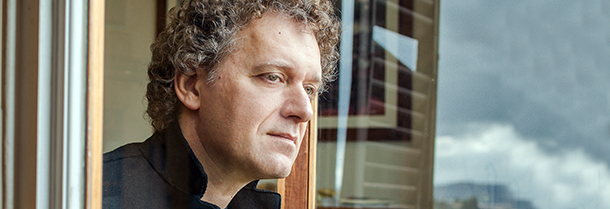
PROGRAM NOTES: ANDREA LUCCHESINI
Domenico Scarlatti Six Sonatas K 491 – K 454 – K 239 – K 466 – K 342 – K 146 The 550-odd sonatas of Domenico Scarlatti are perhaps the most successful works to migrate from the harpsichord to the modern grand piano. Their transparent texture of simple two- and three-part keyboard writing has one foot in the imitative counterpoint of…
-

PROGRAM NOTES: IGOR LEVIT
Johann Sebastian Bach Chaconne in D minor BWV 1004 (arr. Brahms) The Bach revival of the 19th century began with a performance of the St. Matthew Passion in Berlin in 1829, conducted by the 20-year-old Felix Mendelssohn. It reached its stride at mid-century with the founding, by Robert Schumann and others, of the Bach-Gesellschaft, a society…
-

PROGRAM NOTES: JULIA BULLOCK & JOHN ARIDA
FRANZ SCHUBERT (1797–1828) Four Lieder About the Composer Franz Schubert established the German lied as an important art form and then set a standard of excellence that no one since has quite matched. Schubert created more than 600 songs in a prodigious outpouring that sometimes saw him composing five songs in a single day. However,…
-
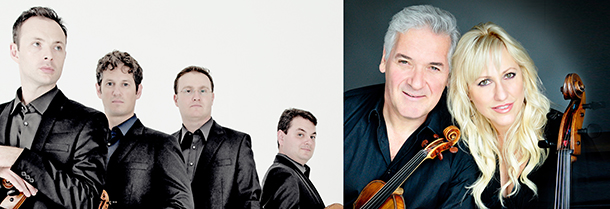
PROGRAM NOTES: JERUSALEM QUARTET WITH PINCHAS ZUKERMAN & AMANDA FORSYTH
Richard Strauss String Sextet from Capriccio Capriccio (1942), Richard Strauss’ last stage work, is an opera about opera, constructed as a series of elegant salon conversations dealing with a question that has bedevilled opera lovers for centuries: which is more important, the words or the music? The year is 1775 and the setting is the…
-
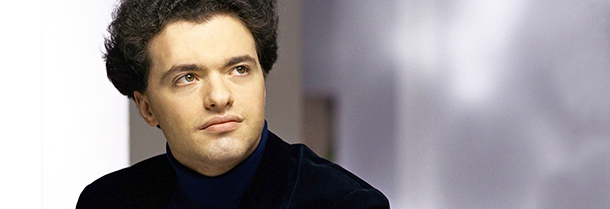
PROGRAM NOTES: EVGENY KISSIN
Frédéric Chopin and Robert Schumann “…calling it a sonata is a caprice if not a jest for Chopin seems to have taken four of his most unruly children and put them together possibly thinking to smuggle them, as a sonata, into company where them might not be considered individually presentable.” That’s the perceptive way Robert…
-
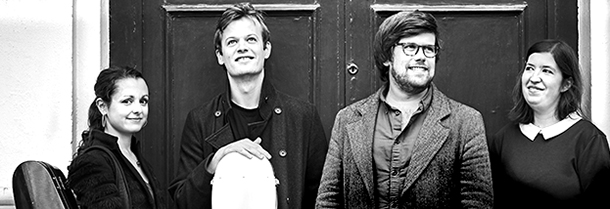
PROGRAM NOTES: CASTALIAN STRING QUARTET
Franz Joseph Haydn String Quartet in D, Op. 76 No. 5 Having recently returned from his hugely successful visits to England and been liberated from financial woes, Haydn composed a set of six String Quartets, Op. 76 which were commissioned by Hungarian Count, Joseph Erdödy in 1797. Deviating from more traditional forms and establishing a…
-

PROGRAM NOTES: PAUL LEWIS
Ludwig van Beethoven 11 Bagatelles Op. 119 Beethoven’s Op. 119 is a catch-all collection of pieces written without any preconceived formal plan for the enjoyment of amateur piano enthusiasts. The last five were published first as a contribution to a pedagogical publication called the Wiener Piano-Forte Schule (1821), with the first six added to that…
-
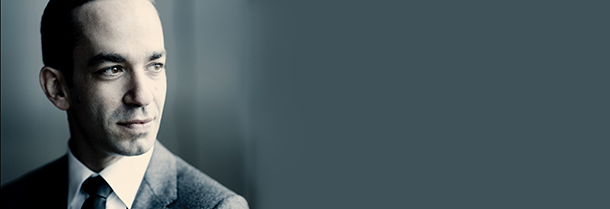
PROGRAM NOTES: INON BARNATAN
George Frederick Handel Chaconne in G Major While Handel is principally remembered as a composer of operas and oratorios, it was well known to his contemporaries that he possessed major moxy as a keyboard performer, as well. In witness thereof, history records a famous keyboard duel in 1708 between Handel and Domenico Scarlatti, hosted in…
-

PROGRAM NOTES: EDGAR MOREAU & JESSICA XYLINA OSBORNE
Francis Poulenc Sonata for Cello and Piano Op. 143 Mozart meets Stravinsky – in a Paris cabaret. As unlikely as such a meeting might be in historical terms, it is about as good a description as you can find for the musical style of French composer Francis Poulenc. The directness of his writing, its exuberance…
-
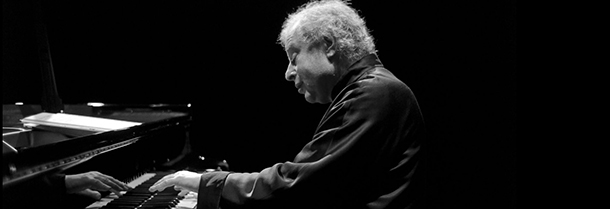
PROGRAM NOTES: SIR ANDRÁS SCHIFF
Robert Schumann Variations on an Original Theme in E at major (“Ghost Variations”) WoO 24 In February of 1854, Robert Schumann was in a state of delirium, but a very musical one. He was surrounded by ghosts, he told his wife Clara, ghosts that fed him wonderful music and had occasionally tried to drag him down…
-
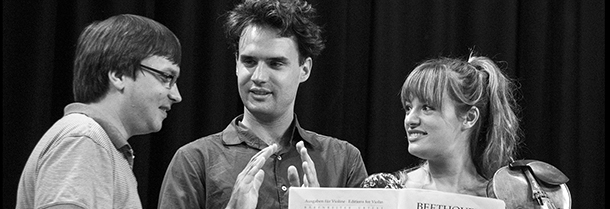
PROGRAM NOTES: BENEDETTI ELSCHENBROICH GRYNYUK TRIO
Franz Schubert Adagio from Piano Trio in E at Major Op. 148 D 897 Schubert’s Adagio for Piano Trio D 897 was composed in 1827 but only published decades later, under the publisher’s title Notturno. And indeed, the opening section does conjure up images of nighttime serenity, with its heavenly texture of harp-like arpeggios in…
-

PROGRAM NOTES: SCHAGHAJEGH NOSRATI
Johann Sebastian Bach GOLDBERG VARIATIONS BWV 988 Historical Background Such was Bach’s mastery of his musical materials that he was often tempted to explore a particular genre or compositional technique in a systematic way by providing a quasi-exhaustive compendium of its possibilities. Fugue, for example, is represented in the two books of The Well-Tempered Clavier…