

Blog Type: Program Notes
-

PROGRAM NOTES: JOYCE DIDONATO WITH IL POMO D’ORO CHAMBER ORCHESTRA
WAR, PEACE and BAROQUE OPERA The lust for war, the longing for peace: emotions such as these lie at the extremes of human experience. What better place to explore them than in the luridly violent, yet touchingly pathos- filled world of Baroque opera, where chaos reigns in the personal lives of kings and queens, stand-…
-
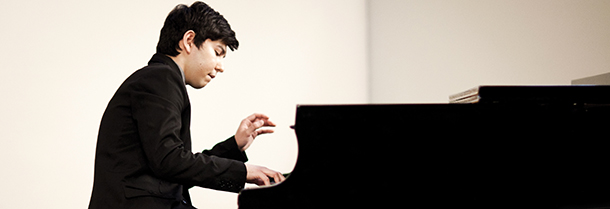
PROGRAM NOTES: BEHZOD ABDURAIMOV
Antonio Vivaldi Siciliana in D minor (arr. J. S. Bach and Alfred Cortot) Nothing could be more Baroque than an arrangement of an arrangement. The Baroque was a period in music history in which music travelled freely between instruments and instrumental ensembles. Bach’s Organ Concerto No. 5 for solo organ BWV 596, composed sometime…
-
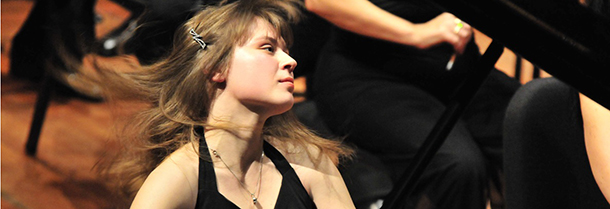
PROGRAM NOTES: ANNA FEDOROVA
Wolfgang Amadeus Mozart Fantasia in D minor K. 397 Mozart’s D minor Fantasia is a bundle of mysteries; an intriguing sound-puzzle for the listener but a labyrinthine minefield of interpretive choices for the pianist. Mere slavish attention to the details of the printed score—the motto and creed of historically informed pianism—risks missing the point entirely in a…
-

PROGRAM NOTES: ISTVÁN VÁRDAI
Felix Mendelssohn Variations Concertantes Op. 17 Felix was not the only musician in the Mendelssohn family. His older sister Fanny Mendelssohn Hensel (1805-1847) was a prodigiously talented pianist and composer, although she chose marriage over a public career, and his younger brother Paul Mendelssohn (1812-1874) was no slouch as a cellist, to judge by the…
-
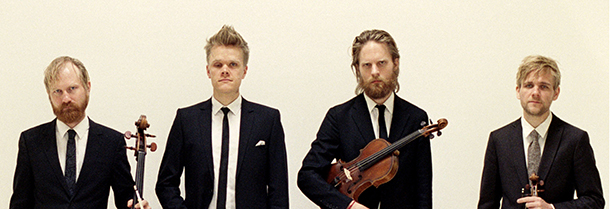
PROGRAM NOTES: THE DANISH STRING QUARTET
Johann Sebastian Bach Well-Tempered Clavier II Fugue No. 7 in E-flat major BWV 876 (arr. Mozart) In 1782 Mozart’s patron, Baron Gottfried van Swieten, showed the composer a number of manuscripts of the works of Johann Sebastian Bach and encouraged him to make string arrangements for performance at the Baron’s regular series of Sunday afternoon…
-

PROGRAM NOTES: KSENIJA SIDOROVA
The Concert Accordion Early Beginnings The accordion has for centuries been associated with music of a light or popular nature. Its portability, full harmonic texture and penetrating, reedy timbre have made it the ideal mini-orchestra for country dances and the perfect one-man house band for city cafés and music halls. The very sound of…
-
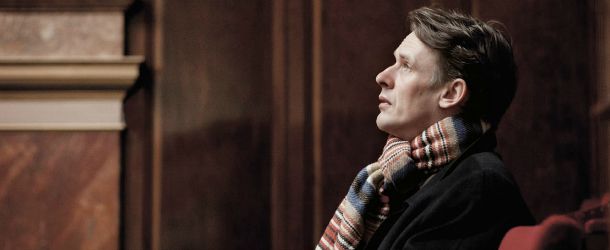
PROGRAM NOTES: IAN BOSTRIDGE & WENWEN DU
Gustave Mahler Three Des Knaben Wunderhorn Songs The collection of German folk poetry published between 1805 and 1808 under the title Des Knaben Wunderhorn (The Youth’s Magic Horn) had an enormous influence on the development of German lyric poetry and song in the 19th century, and the artless simplicity of these verses was particularly attractive…
-

PROGRAM NOTES: BRYN TERFEL & NATALIA KATYUKOVA
Idris Lewis Cân yr arad goch (Ceiriog) The Welsh poet John Hughes (1832-1887), who took the bardic name Ceiriog, is known as the “Robert Burns of Wales.” Like the great Scottish poet, he sought to express his love for his homeland through poems written in the simple, sincere language of the common people, drawing upon…
-
PROGRAM NOTES: SCHUBERTIADE PERFORMANCE 3
Sonata in A major D959 Schubert’s penultimate piano sonata was one of three written in the summer of 1828, just months before his death. This is a pianistically challenging work of unusually wide emotional range. Its moods run the gamut from the heroic to the playful, featuring outbursts of musical vehemence that alternate with moments…
-
PROGRAM NOTES: SCHUBERTIADE PERFORMANCE 2
Fantasie in F minor for piano four hands D940 Schubert’s Fantasie in F minor for piano duet, composed in 1828, is similar in structure to the composer’s ‘Wanderer’ Fantasy of 1822. Both are laid out in one continuous movement of four sonata-like sections played without interruption, comprising an opening Allegro, a slow movement, a scherzo…
-
PROGRAM NOTES: SCHUBERTIADE PERFORMANCE 1
Sonata in C minor D958 Of the three last sonatas Schubert wrote just before his death in 1828, it is the Sonata in C minor that most reveals him as Beethovenian, not just in his choice of key, synonymous with Beethoven’s most turbulent musical thoughts, but more tellingly in the restless energy and propulsive forward…
-
PROGRAM NOTES: MARK PADMORE & PAUL LEWIS
The age of the German lied, an art-song for solo voice with piano accompaniment, extends from the first songs of Schubert (1814) to the last songs of Hugo Wolf (1897). Its emergence in the early part of the 19th century was strongly influenced by literary Romanticism, and it is not a coincidence that lyric poems…
-
PROGRAM NOTES: BROWN-URIOSTE-CANELLAKIS TRIO
Franz Joseph Haydn Piano Trio in F sharp minor, Hob. XV/26 Haydn’s piano trios are really just accompanied piano sonatas, with the cello doubling the bass line and the violin the melody on top. Such a stylistically regressive texture, so unlike the string quartet’s ideal of conversation between musical equals, nevertheless had its advantages. As…
-
PROGRAM NOTES: RICHARD GOODE
Bach: Prelude and Fugue No. 1 in C major, BWV 870 Among the chores assigned to the prelude in the time of Bach were those of catching the listener’s attention, establishing the tonality of the following (presumably more important) piece, and in the process, warming up the player’s hands with a bit of free-form noodling.…
-
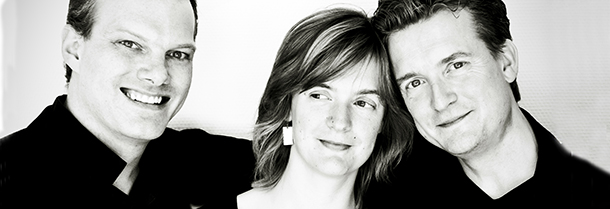
PROGRAM NOTES: TETZLAFF TRIO
Robert Schumann Piano Trio No. 2 in F major, Op. 80 Robert Schumann began composing in the 1830s, a time when the formation of a canon of great musical works was just beginning, thanks to new publications of older music and to concerts of ‘historical’ or ‘antique’ music such as Mendelssohn’s famous performance of Bach…
-

PROGRAM NOTES: IGOR LEVIT
Johann Sebastian Bach Partita No. 4 in D major, BWV 828 The Baroque suite was the iPod shuffle of its time. It was a colourful bowl of musical Smarties with a cosmopolitan flavour, offering a collection of dances from all the major musical nations of Europe: the moderately-paced allemande from Germany, the much animated courante from France…
-

PROGRAM NOTES: SIR ANDRÁS SCHIFF (TUESDAY, FEBRUARY 9)
Franz Joseph Haydn Sonata No. 62 in E flat major, Hob. XVI:52 Joseph Haydn wrote his last three piano sonatas on his second visit to England (1794-95), keenly aware that the sound of the English piano was very different from that of its Viennese counterpart. Viennese pianos were quick and responsive but their sound, like…
-
PROGRAM NOTES: SIR ANDRÁS SCHIFF (SUNDAY, FEBRUARY 7)
Wolfgang Amadeus Mozart Sonata in B flat major K. 570 The period of the 1770s and 1780s brought regime change to the world of keyboard music as the harpsichord was gradually edged out by the first generation of fortepianos, capable of playing both loud (forte) and soft (piano) on the same set of keys. The…
-

PROGRAM NOTES: ROMAN RABINOVICH
Franz Joseph Haydn Sonata in B-flat Major, Hob. XVI:41 In 1784 Haydn wrote three keyboard sonatas for Princess Marie, the new bride of Prince Nicholas Esterházy, grandson of Haydn’s employer Prince Nicholas I. Each is a two- movement work, without a lyrical slow movement, perhaps reflecting the taste of the young Princess for lighter fare.…
-

PROGRAM NOTES: APOLLON MUSAGÈTE QUARTET
Ludwig van Beethoven String Quartet in D major, Op. 18 No. 3 In the Napoleonic era, when a Viennese aristocrat was thinking of entertaining friends at home, he might pop down to the local shop to pick up a six-pack—a six-pack of string quartets, that is. The most refined form of self-entertainment in the homes…
-

PROGRAM NOTES: LEIF OVE ANDSNES
Jean Sibelius Kyllikki, Three Lyric Pieces for Piano Op. 41 Finland’s national composer, Jean Sibelius, has earned an honoured place in the modern canon chiefly on the merits of his orchestral works, notably his seven symphonies, the Violin Concerto, and the tone poem Finlandia. Less celebrated are the composer’s more than 150 miniatures for piano,…