

Blog Type: Program Notes
-
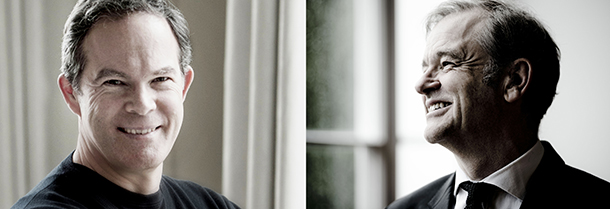
PROGRAM NOTES: GERALD FINLEY & JULIUS DRAKE
Franz Schubert: Die Winterreise The art songs of Franz Schubert lie at the foundation of the lied genre itself, and at the pinnacle of Schubert’s lieder output stands Die Winterreise, a song cycle remarkable for its vivid musical portraits of the human heart smarting from the pains of love lost, and stoically resigned to the…
-

PROGRAM NOTES: AVI AVITAL
Avi Avital: Kedma “To open the concert, I have chosen to perform a composition- improvisation of my own. Unlike a composer’s relationship to an instrument and to a musical form, the performer’s relationship to his instrument, as in this case, is expressed in a frequent dialogue to “get to know” each other better. This improvisation,…
-
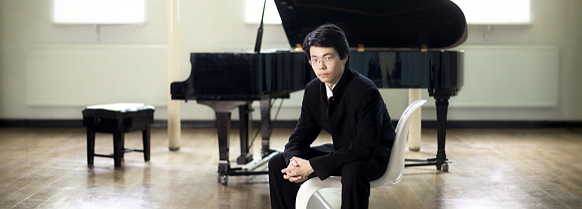
PROGRAM NOTES: KUOK-WAI LIO
Leoš Janáček: In the Mists Janáček’s four-movement piano cycle from 1912 presents us with intimate, personal and emotionally immediate music that stands stylistically on the border between eastern and western Europe. Its sound world is that of the fiddles and cimbalom (hammered dulcimer) of Moravian folk music. Equally folk-like is its use of small melodic…
-
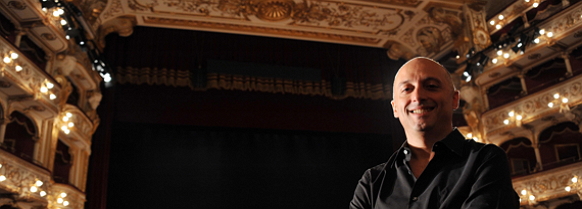
PROGRAM NOTES: BENEDETTO LUPO
Johannes Brahms: Three Intermezzi, Op. 117 The three Intermezzi Op.117 are, together with the piano pieces of Op. 116, 118 and 119, collectively the last Brahms wrote for solo piano, and are among his very last compositions. Only three more opus numbers followed, and they involved the keyboard as well. In a way, it was…
-
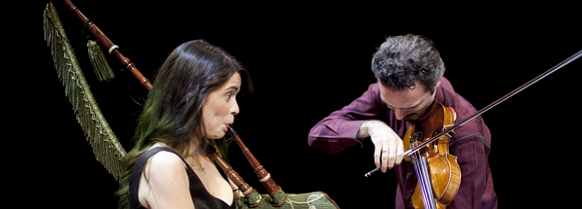
PROGRAM NOTES: THE SILK ROAD ENSEMBLE
For nearly two thousand years (ending in the 14th century), the historical Silk Road, a series of land and sea trade routes, crisscrossed Eurasia, enabling the exchange of goods and innovations from Japan to the Mediterranean Sea. Over the centuries, many important scientific and technological innovations migrated to the West along the Silk Road,…
-

PROGRAM NOTES: VILDE FRANG
Felix Mendelssohn: Violin Sonata in F major Mendelssohn’s E minor Violin Concerto is such an established pillar of the standard repertory that it comes as a surprise to learn that this composer also wrote three sonatas for the instrument, although these are as obscure as the concerto is popular. The first, in F major,…
-

PROGRAM NOTES: BEATRICE RANA
Robert Schumann: Abegg Variations, Op. 1 Schumann’s Abegg Variations first appeared in November of 1831, but Schumann had completed it more than a year earlier, shortly after his twentieth birthday and before he had made the commitment to a life of music (he was still studying law in Heidelberg at the time). It is…
-
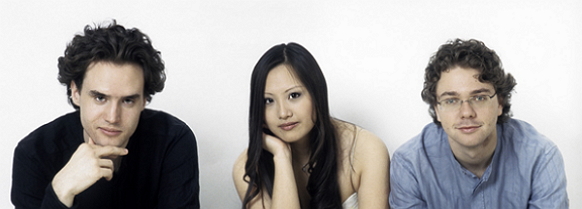
PROGRAM NOTES: SITKOVETSKY TRIO
Johannes Brahms: Piano Trio no. 3 in C minor, Op. 101 This is the last work Brahms wrote for the piano trio. It is a magnificent work in every respect, from the sharply etched melodies to the concision and masterly manner in which they are handled. It is also one of Brahms’s most compact…
-
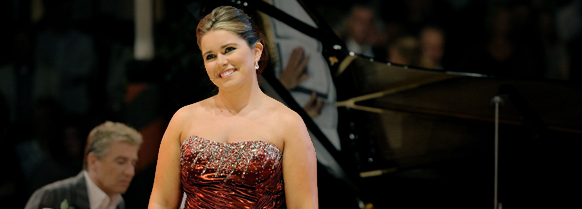
PROGRAM NOTES: TARA ERRAUGHT
Johannes Brahms: Zigeunerlieder (Gypsy Songs), Op. 103 More than half of Brahms’ total output was vocal, including over two hundred art songs and an additional hundred folksong arrangements. Most of them are serious, introspective, resigned or elegiac in mood. Ardent, impulsive effusions are rare, and the musical pictorialism so dear to Schubert is likewise…
-

PROGRAM NOTES: SIMON TRPČESKI
Program Notes: Simon Trpčeski Schubert: 16 German Dances, D. 783 (Op. 33) So indelibly is the name Johann Strauss embedded in our consciousness as the purveyor of Viennese dance music that we tend to forget such music existed well before the Waltz King appeared on the scene. Not just minor, forgotten figures like Pamer, Faisatenberger…
-
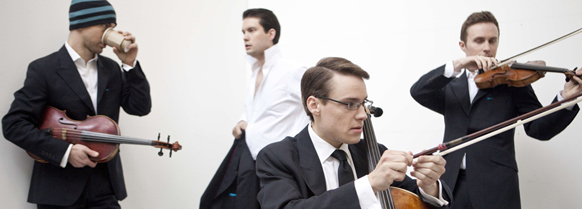
PROGRAM NOTES: DORIC STRING QUARTET
Franz Joseph Haydn: String Quartet in G minor, Op. 20, no. 3 A strong new current of artistic expression swept through central Europe during the late 1760s and early 1770s, known as Sturm und Drang (storm and stress). While not every work was stormy or stressful, the moniker served notice that composers were turning…
-
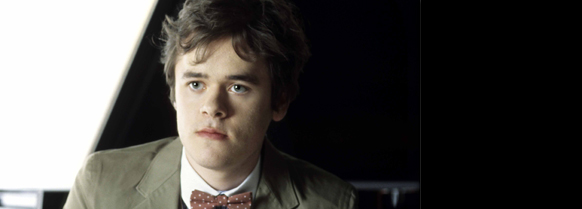
PROGRAM NOTES: BENJAMIN GROSVENOR
J. S. Bach: Five transcriptions Benjamin Grosvenor opens his program with a series of piano transcriptions, a genre that was wildly popular in the late nineteenth and early twentieth centuries, then went out of fashion, and is now making something of a comeback. Transcription – the transferal from one medium to another – is as…
-
PROGRAM NOTES: NING FENG
Program Notes: Ning Feng Ludwig van Beethoven: Violin sonata no. 1 in D major, Op. 12, no. 1 Ludwig van Beethoven wrote his first violin sonatas, a set of three (Op. 12) in 1797-98. Six more sonatas appeared by early 1803, and one more in 1812. Although we refer to these ten works as “violin…
-

PROGRAM NOTES: AUGUSTIN HADELICH
Robert Schumann: Violin sonata No. 1 in A minor, Op. 105 Schumann wrote both of his completed sonatas for violin and piano in 1851. His wife Clara played the piano parts at their public premieres with violinists Ferdinand David (No. 1 in 1852) and Joseph Joachim (No. 2 in 1853). Though frequently recorded, these…
-

PROGRAM NOTES: MILOŠ KARADAGLIĆ
Bach: Suite in C minor, BWV 997, for lute In most catalogues of the complete works of Johann Sebastian Bach (1685-1750), one learns that the composer wrote four suites for the lute, all dating from widely separated time periods, plus miscellaneous other pieces. However, recent scholarship has determined that in fact Bach did not…
-

PROGRAM NOTES: NAREK HAKHNAZARYAN
César Franck: Sonata in A major For most of his life, Franck led a relatively quiet existence as an organist and pedagogue, emerging from obscurity as a composer only near the end of his life. His only violin sonata (which has also been arranged for numerous other instruments, notably flute, viola and cello) was created…
-
PROGRAM NOTES: ANTHONY ROTH COSTANZO
Henri Duparc was, with Berlioz and Fauré, among the pioneers of la mélodie (the French art song, as distinguished from folk song). His career was remarkable in that although he lived for 85 years, his reputation rests on barely more than a dozen songs. “Chanson triste” was Duparc’s first song, written at the age…
-
PROGRAM NOTES: STEPHEN HOUGH
Frédéric Chopin: Nocturnes, Op. 27 The nocturnes are Chopin’s most intimate and personal utterances. Some are wistful, some reflective, some melancholy, some faintly troubled and some serenely joyful. All are sensuously beautiful, suffused with elegance and deeply poetic impulses. During Chopin’s lifetime they were his most popular pieces. Twenty-one survive, the first written when…
-
PROGRAM NOTES: MARC-ANDRÉ HAMELIN
Alban Berg: Piano sonata, Op. 1 “Among the most auspicious Opus Ones ever written,” was Glenn Gould’s assessment of Alban Berg’s piano sonata. Berg wrote this work in 1907-08 while studying with Arnold Schönberg. Originally it was intended to have three movements but, after completing the first, Berg found that “for a long time nothing…
-
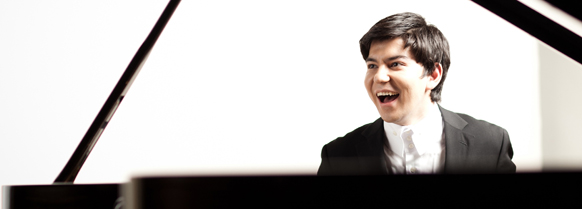
PROGRAM NOTES: BEHZOD ABDURAIMOV
Franz Schubert: Piano sonata in A major, D. 664 (Op. 120) Scholars lack definite evidence for the date and place of composition of Schubert’s early A major sonata, but most are willing to grant that most likely he wrote it during the summer of 1819 while vacationing in Steyr in Upper Austria. He wrote to…
-
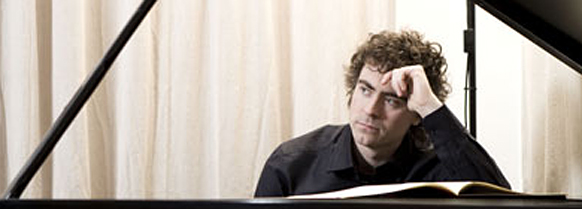
PROGRAM NOTES: PAUL LEWIS
Paul Lewis performs the Late Schubert Sonatas The year of Schubert’s death, 1828, saw the birth of an extraordinary number of masterpieces from the pen of this master lyricist: the “Great” C major Symphony, the Mass in E-flat, the String Quintet in C, thirteen of his finest songs, and the final trilogy of great…