

Blog Type: Program Notes
-
PROGRAM NOTES: SCHUBERTIADE PERFORMANCE 2
Fantasie in F minor for piano four hands D940 Schubert’s Fantasie in F minor for piano duet, composed in 1828, is similar in structure to the composer’s ‘Wanderer’ Fantasy of 1822. Both are laid out in one continuous movement of four sonata-like sections played without interruption, comprising an opening Allegro, a slow movement, a scherzo…
-
PROGRAM NOTES: SCHUBERTIADE PERFORMANCE 1
Sonata in C minor D958 Of the three last sonatas Schubert wrote just before his death in 1828, it is the Sonata in C minor that most reveals him as Beethovenian, not just in his choice of key, synonymous with Beethoven’s most turbulent musical thoughts, but more tellingly in the restless energy and propulsive forward…
-
PROGRAM NOTES: MARK PADMORE & PAUL LEWIS
The age of the German lied, an art-song for solo voice with piano accompaniment, extends from the first songs of Schubert (1814) to the last songs of Hugo Wolf (1897). Its emergence in the early part of the 19th century was strongly influenced by literary Romanticism, and it is not a coincidence that lyric poems…
-
PROGRAM NOTES: BROWN-URIOSTE-CANELLAKIS TRIO
Franz Joseph Haydn Piano Trio in F sharp minor, Hob. XV/26 Haydn’s piano trios are really just accompanied piano sonatas, with the cello doubling the bass line and the violin the melody on top. Such a stylistically regressive texture, so unlike the string quartet’s ideal of conversation between musical equals, nevertheless had its advantages. As…
-
PROGRAM NOTES: RICHARD GOODE
Bach: Prelude and Fugue No. 1 in C major, BWV 870 Among the chores assigned to the prelude in the time of Bach were those of catching the listener’s attention, establishing the tonality of the following (presumably more important) piece, and in the process, warming up the player’s hands with a bit of free-form noodling.…
-
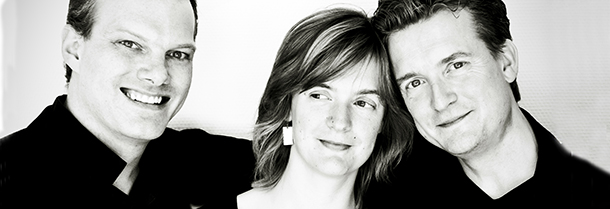
PROGRAM NOTES: TETZLAFF TRIO
Robert Schumann Piano Trio No. 2 in F major, Op. 80 Robert Schumann began composing in the 1830s, a time when the formation of a canon of great musical works was just beginning, thanks to new publications of older music and to concerts of ‘historical’ or ‘antique’ music such as Mendelssohn’s famous performance of Bach…
-
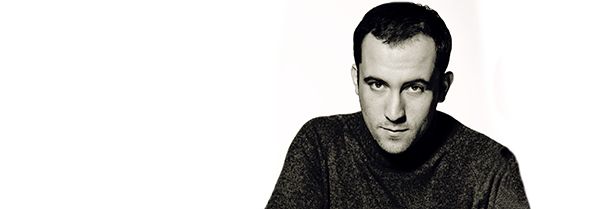
PROGRAM NOTES: IGOR LEVIT
Johann Sebastian Bach Partita No. 4 in D major, BWV 828 The Baroque suite was the iPod shuffle of its time. It was a colourful bowl of musical Smarties with a cosmopolitan flavour, offering a collection of dances from all the major musical nations of Europe: the moderately-paced allemande from Germany, the much animated courante from France…
-
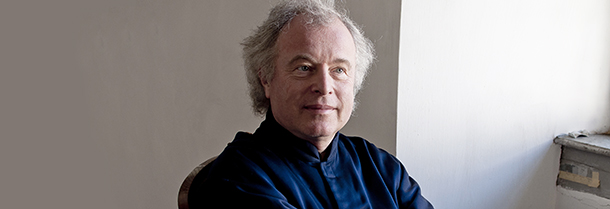
PROGRAM NOTES: SIR ANDRÁS SCHIFF (TUESDAY, FEBRUARY 9)
Franz Joseph Haydn Sonata No. 62 in E flat major, Hob. XVI:52 Joseph Haydn wrote his last three piano sonatas on his second visit to England (1794-95), keenly aware that the sound of the English piano was very different from that of its Viennese counterpart. Viennese pianos were quick and responsive but their sound, like…
-
PROGRAM NOTES: SIR ANDRÁS SCHIFF (SUNDAY, FEBRUARY 7)
Wolfgang Amadeus Mozart Sonata in B flat major K. 570 The period of the 1770s and 1780s brought regime change to the world of keyboard music as the harpsichord was gradually edged out by the first generation of fortepianos, capable of playing both loud (forte) and soft (piano) on the same set of keys. The…
-

PROGRAM NOTES: ROMAN RABINOVICH
Franz Joseph Haydn Sonata in B-flat Major, Hob. XVI:41 In 1784 Haydn wrote three keyboard sonatas for Princess Marie, the new bride of Prince Nicholas Esterházy, grandson of Haydn’s employer Prince Nicholas I. Each is a two- movement work, without a lyrical slow movement, perhaps reflecting the taste of the young Princess for lighter fare.…
-

PROGRAM NOTES: APOLLON MUSAGÈTE QUARTET
Ludwig van Beethoven String Quartet in D major, Op. 18 No. 3 In the Napoleonic era, when a Viennese aristocrat was thinking of entertaining friends at home, he might pop down to the local shop to pick up a six-pack—a six-pack of string quartets, that is. The most refined form of self-entertainment in the homes…
-

PROGRAM NOTES: LEIF OVE ANDSNES
Jean Sibelius Kyllikki, Three Lyric Pieces for Piano Op. 41 Finland’s national composer, Jean Sibelius, has earned an honoured place in the modern canon chiefly on the merits of his orchestral works, notably his seven symphonies, the Violin Concerto, and the tone poem Finlandia. Less celebrated are the composer’s more than 150 miniatures for piano,…
-
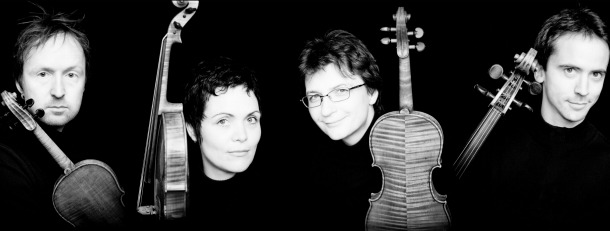
PROGRAM NOTES: ARCANTO QUARTET
This evening the Arcanto Quartet offers us a chance to explore chamber music from the end of the 17th century to the recent past, sampling music for four players by Henry Purcell (1659–95), Ludwig van Beethoven (1770–1827), and Benjamin Britten (1913-1976). Henry Purcell Long before the primacy of the string quartet, consort music for…
-
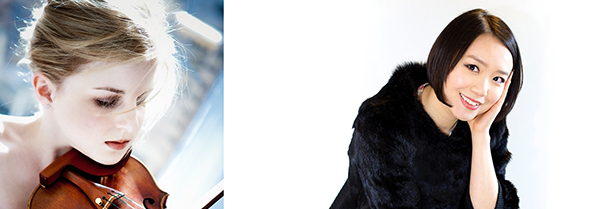
PROGRAM NOTES: CAROLINE GOULDING & WENWEN DU
Johann Sebastian Bach Sonata in A major, BWV 1015 Before taking up his post as Cantor of the Thomaskirche in Leipzig in 1723, Bach served as Kapellmeister to Prince Leopold of Anhalt-Köthen (1694-1728). The young Prince was of the Calvinist persuasion, and thus had little need for church music, but he was also an avid…
-

PROGRAM NOTES: RAPHAËL SÉVÈRE & PAUL MONTAG
Alexander Borodin Sonata for Cello and Piano in B Minor (adapted for clarinet & piano by Raphaël Sévère) The role of the noisy neighbour in music history is an unjustly neglected theme for research but well worth considering in the case of Alexander Borodin’s Sonata for Cello & Piano in B minor (c.1860). Deeply imprinted…
-
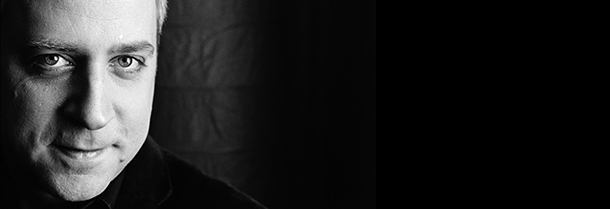
PROGRAM NOTES: JEREMY DENK
Johann Sebastian Bach English Suite No. 3 in G Minor, BWV 808 Bach’s keyboard suites are a remarkable amalgam of the florid keyboard idiom of the French, the lyrical gift for vocal melody of the Italians, and the sober contrapuntal rigour of his fellow Germans. The suites which posthumously (and illogically) came to be labelled…
-
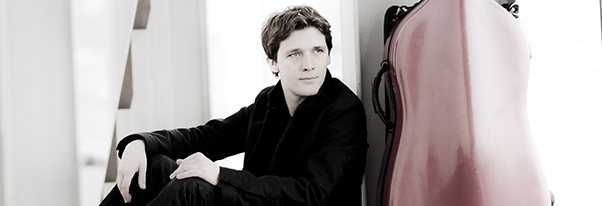
PROGRAM NOTES: MAXIMILIAN HORNUNG & BENJAMIN ENGELI
Robert Schumann Fünf Stücke im Volkston, Op. 102 Long before Martha Stewart made middle-class home furnishings a “thing,” the Biedermeier period (1815-1848) ushered in a bourgeois age of cozy home interiors that celebrated domestic family life and gave music a prominent place within it. Biedermeier Europe enjoyed the blessings of peace after the defeat of…
-

PROGRAM NOTES: PAUL LEWIS
Beethoven’s Late Piano Sonatas If ever a composer were to be remembered as going out swinging, that composer would be Beethoven. As ‘sunset’ periods go, the blaze of glory that the late piano sonatas and quartets, the Diabelli Variations, the Missa Solemnis and Ninth Symphony lit up in the historical firmament can still be felt…
-
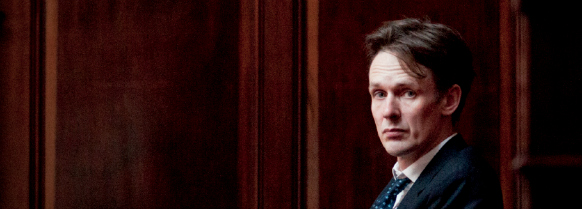
PROGRAM NOTES: IAN BOSTRIDGE & WENWEN DU
Franz Schubert Winterreise It is a fact of musical life that there are commonly accepted ‘right’ ways (and even more ‘wrong’ ways) of performing the great works of past. These works arrive on our music stands embedded with notions of ‘stylistic correctness’ that guide our first attempts at interpretation, serving the same function as the lines…
-

PROGRAM NOTES: JOSEPH MOOG
Ludwig van Beethoven Sonata in C minor Op. 13 (Pathétique) At the end of the 18th century, a young Ludwig van Beethoven burst upon the scene with a musical personality that mixed brooding machismo with emotional vulnerability. This unusual combination soon established him as the Marlon Brando of Viennese composers, with the key of C…
-

PROGRAM NOTES: YUN-CHIN ZHOU
Domenico Scarlatti Three Sonatas The 550-odd sonatas of Domenico Scarlatti are perhaps the most successful works to migrate from the harpsichord to the modern grand piano. Their transparent texture of simple two- and three-part keyboard writing has one foot in the imitative counterpoint of the Baroque while anticipating the Classical era of Haydn and Mozart…