

Tag: Vancouver Recital Society
-

PROGRAM NOTES: NICOLAS ALTSTAEDT
Henri Dutilleux Trois strophes sur le nom de Sacher Swiss conductor Paul Sacher (1906-1999), founder of the Basel Chamber Orchestra, was an immensely important figure in 20th-century music. With a family fortune based on a controlling share of the Hoffman-LaRoche pharmaceutical empire, he commissioned works from some of the century’s greatest composers. These commissioned works…
-

PROGRAM NOTES: EVGENY KISSIN
Johann Sebastian Bach Toccata and Fugue in D minor BWV 565 (arr. Tausig) While keyboard transcription and political debate might at first blush seem to be radically different fields of endeavour, one justly famous incident on American television stands emblematic of the risks run, in both disciplines, for those who would engage in rhetorical posturing.…
-
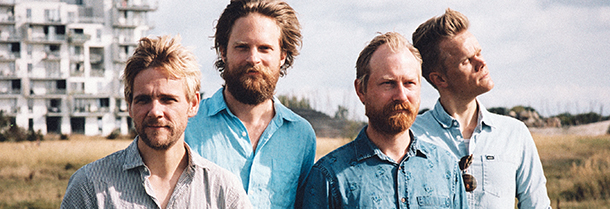
PROGRAM NOTES: DANISH STRING QUARTET II
Franz Schubert String Quartet No. 14 in D minor D. 810 (Death and the Maiden) Schubert’s “Death and the Maiden” string quartet is a sombre work, with all four of its movements set in a minor key. It takes its name from the composer’s lied Der Tod und das Mädchen (1817) that provides the theme for…
-
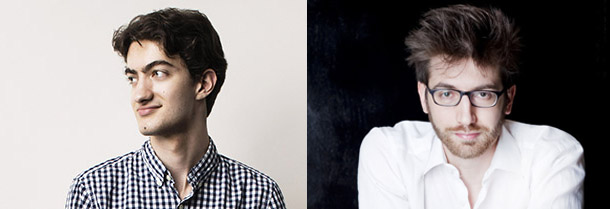
PROGRAM NOTES: STEPHEN WAARTS
Claude Debussy Sonata for Violin and Piano in G minor L. 140 The sound of Debussy’s music confounded many of his contemporaries. From a tonal point of view, it floated in stasis in a world of pastel sounds that arrived at their destination more by whim than by design. How, they asked, could what he…
-
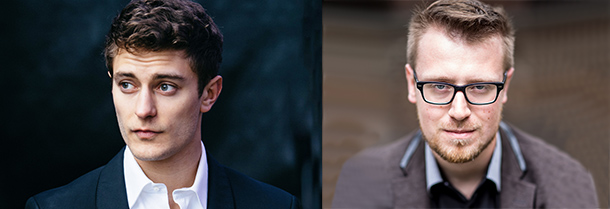
PROGRAM NOTES: JAKUB JÓZEF ORLIŃSKI
J.J. Fux Non t’amo per il ciel from Il fonte della salute, aperto dalla grazia nel Calvario Johann Joseph Fux was an early-18th-century Austrian court composer of the first rank, best known by musicians today for his widely studied treatise on Renaissance counterpoint entitled Gradus ad Parnassum (1725). The Hapsburg court in Vienna was the…
-

PROGRAM NOTES: ISATA KANNEH-MASON
Wolfgang Amadeus Mozart Sonata No. 14 in C minor K. 457 In 1785 Mozart’s Sonata in C minor was published together with the composer’s Fantasia in C minor as a single opus, with the Fantasia forming a kind of introductory ‘prelude’ to the sonata. Given that the Fantasia was composed many months after the sonata,…
-
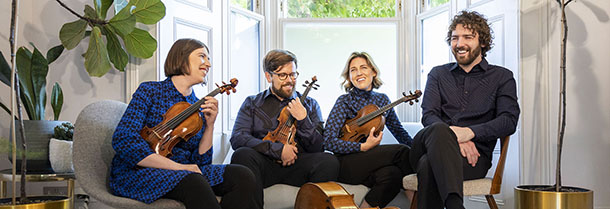
PROGRAM NOTES: CASTALIAN STRING QUARTET
Franz Joseph Haydn String Quartet in D minor Op. 76 No. 2 (“Fifths”) Haydn is known as the father of the string quartet for his leading role in transforming the genre from its origins as light entertainment into a vehicle for serious composition, worthy of standing beside the instrumental sonata and the orchestral symphony. His…
-
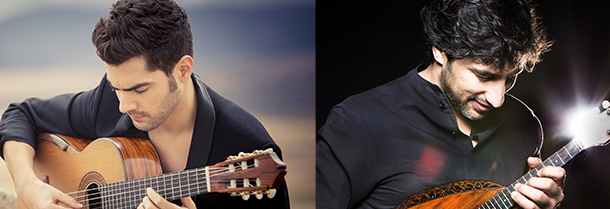
PROGRAM NOTES: MILOŠ AND AVI AVITAL
Johann Sebastian Bach English Suite No. 2 in A minor: Prelude | Well-Tempered Clavier 1: Fugue in C minor | Concerto in D minor (after Marcello): Adagio | Partita No. 2 in C minor: Capriccio In Bach’s time, the instrument closest to the sound world of the guitar and mandolin was the lute. Bach wrote…
-
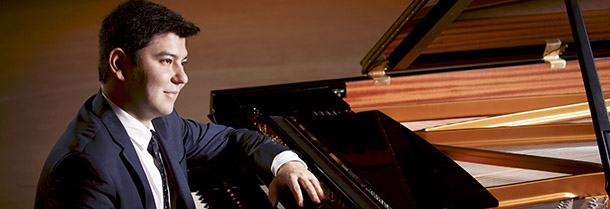
PROGRAM NOTES: BEHZOD ABDURAIMOV
Domenico Scarlatti Sonata in B minor K 27 Sonata in D major K 96 The 550-odd sonatas of Domenico Scarlatti are perhaps the most successful works to migrate from the harpsichord to the modern grand piano. Their transparent texture of simple two- and three-part keyboard writing has one foot in the imitative counterpoint of the…
-

PROGRAM NOTES: AUGUSTIN HADELICH
Johann Sebastian Bach Partita No. 3 in E major BWV 1006 If polyphonic music was not meant to be played on the violin, Johann Sebastian Bach didn’t get the e-mail. His Sonatas and Partitas for solo violin BWV 1001-1006 of 1720 reveal clearly the scope of his ambition in this regard. The six works in…
-
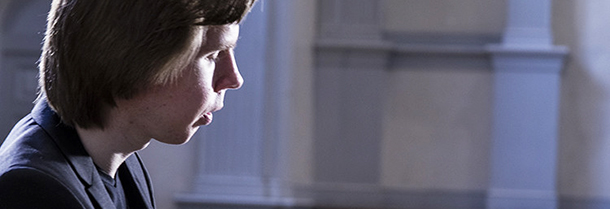
PROGRAM NOTES: JUHO POHJONEN
Wolfgang Amadeus Mozart Fantasy in C minor K 475 The year 1785 was a good one for Mozart. In the words of musicologist John Irving, he had become something of a ‘hot property’ in Vienna, enjoying considerable success both as a published composer and as a performing musician. But Mozart had also acquired a reputation…
-
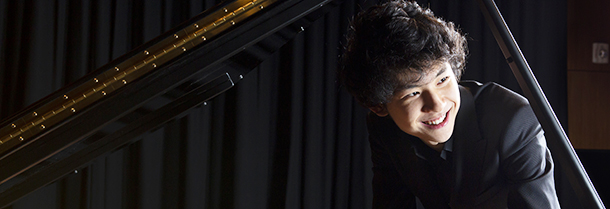
PROGRAM NOTES: TONY SIQI YUN
Johann Sebastian Bach Chaconne in D minor BWV 1004 (arr. Busoni) The 19th century witnessed a revival of interest in the music of Johann Sebastian Bach. But the sound world of the 19th century with its new spacious concert halls and louder, more powerful instruments (played by ego-driven virtuoso performers) flourished at some remove from…
-
PROGRAM NOTES: DANISH STRING QUARTET
Seeing Double: The Doppelgänger Project Reprinted courtesy of Cal Performances, University of California, Berkeley, CA “Mir graust es, wenn ich sein Antlitz sehe/Der Mond zeigt mir meine eigne Gestalt” (“It horrifies me when I see his face/The moon reveals my own likeness…”). These chilling words from one of the poems in Heinrich Heine’s Buch der Lieder…
-
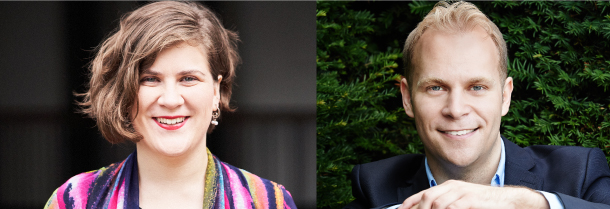
PROGRAM NOTES: EMA NIKOLOVSKA
Mezzo-soprano Eva Nikolovska has curated an intriguing recital program of songs composed in the forty years between 1865 and 1905, a selection that highlights the changing styles of music emanating from three important centres of music-making. From Vienna there are the contrasting voices of the traditionalist Brahms and his aesthetic adversary Hugo Wolf, from France…
-
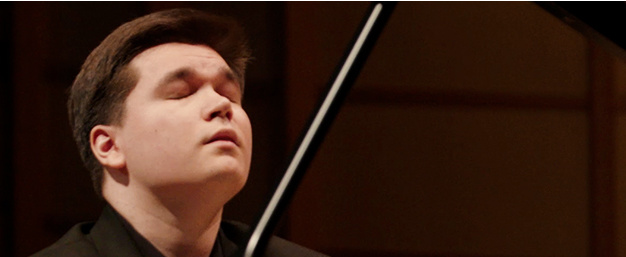
PROGRAM NOTES: TRISTAN TEO
PROGRAM NOTES: TRISTAN TEO Robert Schumann Widmung (arr. Franz Liszt) The year 1840 was Robert Schumann’s Liederjahr, his ‘year of song’. After 10 years of writing almost exclusively for the piano, Schumann in 1840 burst into song, composing well over a hundred Lieder. One song collection, Myrthen Op. 25, had a special meaning for…
-
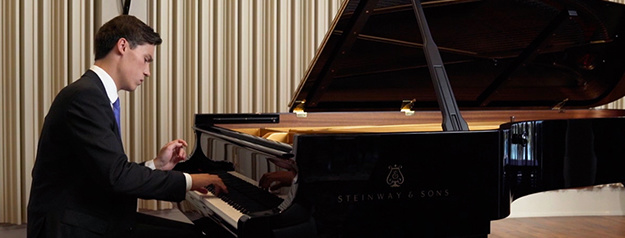
PROGRAM NOTES: JAEDEN IZIK-DZURKO
Alexander Scriabin Valse Op. 38 It is easy to see why Alexander Scriabin was known as “the Russian Chopin.” Like his Polish musical forebear he wrote almost exclusively for the piano and began his career by composing mazurkas, waltzes, nocturnes, preludes and études. In this Valse we catch the composer near the end of his…
-
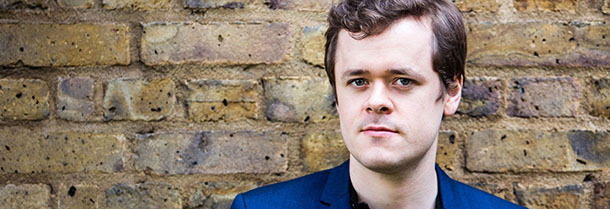
PROGRAM NOTES: BENJAMIN GROSVENOR
Jean-Philippe Rameau Gavotte and Variations in A minor The modern pianist seeking to play the Baroque harpsichord repertoire faces many obstacles, starting with the friendly fire of his own trusty Steinway itself, so different in sound from the perky little plucked-string sound box for which this music was originally written. A note on the harpsichord…
-
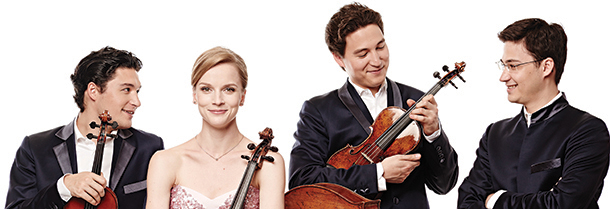
PROGRAM NOTES: SCHUMANN QUARTET
Wolfgang Amadeus Mozart Quartet in D major K. 499 “Hoffmeister” Mozart’s most accomplished string quartets are generally considered to be the ten he wrote after moving to Vienna in 1781, beginning with the set of six dedicated to Haydn, published in 1785 and ending with the set of three dedicated to the King Friedrich Wilhelm II…
-
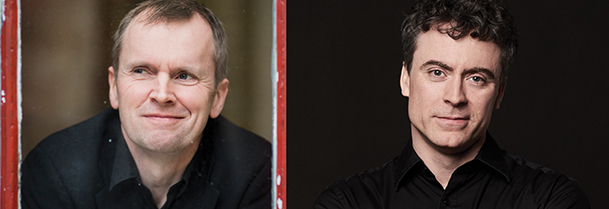
PROGRAM NOTES: STEVEN OSBORNE AND PAUL LEWIS
Gabriel Fauré Dolly Suite Op. 56 In the 1890s Gabriel Fauré would often compose or revise small pieces for the infant daughter of his mistress Emma Bardac (1862-1934). These affectionate pieces celebrated a birthday, a pet, or a special person in the life of the young Regina-Hélène, known in the family as “Dolly,” and six…
-

PROGRAM NOTES: YUJA WANG
Baldassare Galuppi Andante from the Sonata in C major The Venetian musician Baldassare Galuppi was one of the most successful composers of the 18th century. While his prodigious output of vocal music, comprising more than 100 operas, did not survive in the repertoire, interest in his keyboard music was revived in the last half of…
-
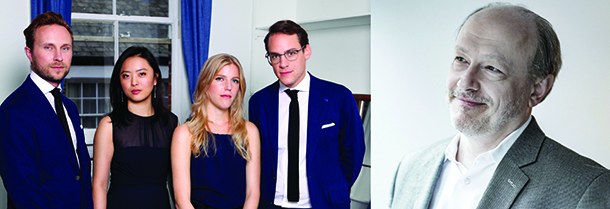
PROGRAM NOTES: DORIC STRING QUARTET WITH MARC-ANDRÉ HAMELIN
Jean Sibelius Quartet in D minor Op. 56 Voces Intimae Sibelius’ Quartet in D minor was completed in 1909 and has five movements, symmetrically arranged in an arch form around the lyrical third-movement Adagio, with scherzos on either side separating it from the opening movement and finale. The name Voces Intimae derives from a Latin…