

Tag: vanrecital
-
-

-
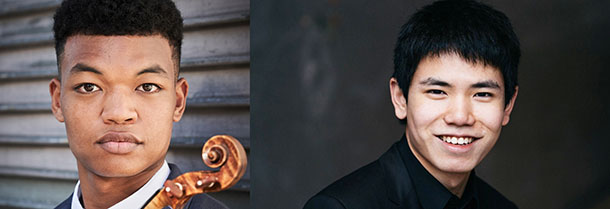
PROGRAM NOTES: RANDALL GOOSBY AND ZHU WANG
Lili Boulanger Deux Morceaux Lili Boulanger was born into a distinguished family of French musicians. Her grandfather, Frédéric Boulanger (b. 1777) had been a professor at the Paris Conservatoire and was married to Marie-Julie Haligner (1786-1850), a mezzo-soprano at the Théâtre de l’Opéra-Comique who had sung in the premiere of Donizetti’s La Fille du Régiment…
-
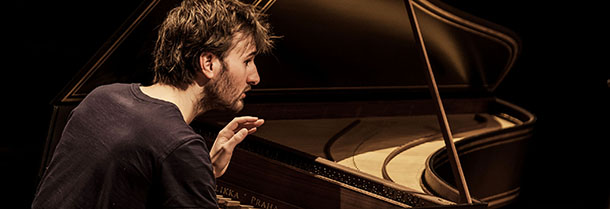
PROGRAM NOTES: JEAN RONDEAU
Johann Sebastian Bach Goldberg Variations BWV 988 Bach’s Aria mit verschiedenen Veränderungen vors Clavicimbal mit 2 Manualen was published in 1741 as the final instalment of his Clavier-Übung series of keyboard works. This monumental exploration of the variation form ranks as the largest single keyboard composition published in the 18th century, in which Bach displays…
-
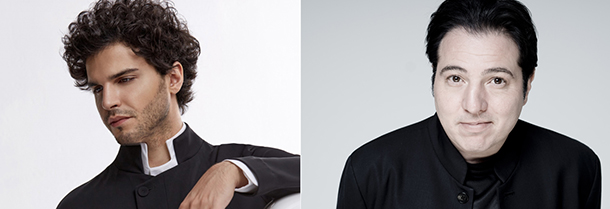
PROGRAM NOTES: JAMAL ALIYEV AND FAZIL SAY
Franz Schubert Sonata in A minor for Arpeggione and Piano D. 821 Schubert’s Arpeggione Sonata was composed in 1824 but only published in 1871—long after the composer’s death in 1828, and almost as long after the principal instrument for which it was written fell out of favour. The six-stringed arpeggione was a kind of large…
-
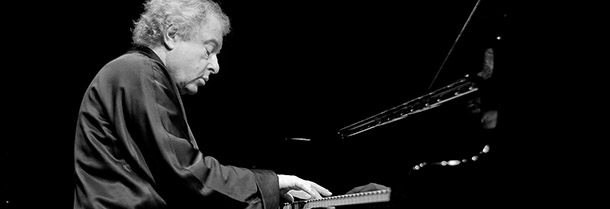
PROGRAM NOTES: SIR ANDRÁS SCHIFF PERFORMS THE GOLDBERG VARIATIONS
Bach’s Clavier-Übung (1726-1741) The works on this evening’s recital are selected from Bach’s collection of keyboard pieces published in four parts between 1726 and 1741 under the collective title Clavier-Übung (keyboard exercise). In this collection Bach systematically lays out for amateur and professional keyboard-players alike his mastery of the genres, compositional techniques, and national styles…
-
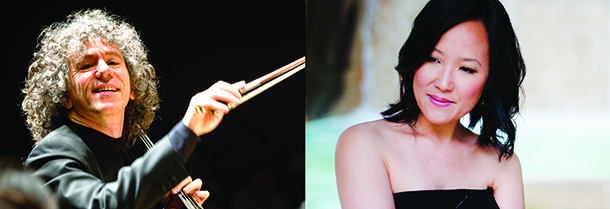
PROGRAM NOTES: STEVEN ISSERLIS AND CONNIE SHIH
Reynaldo Hahn Variations chantantes sur un air ancien The Venezuelan-born French composer Reynaldo Hahn is best known for his contribution to the French song repertoire with his more than 100 mélodies published between 1890 and his death in 1947. He is equally well known as the sometime romantic partner of writer Marcel Proust, whose epic…
-

PROGRAM NOTES: FILIPPO GORINI
Johann Sebastian Bach The Art of Fugue BWV 1080 By the 1740s Bach had largely withdrawn from composing new church music for Leipzig’s Thomaskirche, devoting his creative energies instead to a series of large-scale projects that responded more directly to his own personal and professional interests. These monumental works were encyclopedic in scope, systematic in…
-

PROGRAM NOTES: GOLDA SCHULTZ
Clara Schumann Liebst du um Schönheit | Warum willst du andre frage | Am Strande | Lorelei Clara Schumann (née Wieck) was a major figure in nineteenth-century music. As a child prodigy, she toured Europe with her father and teacher Friedrick Wieck, meeting Goethe in Weimar and Paganini in Paris. After her marriage to Robert…
-

PROGRAM NOTES: STEVEN OSBORNE
Franz Schubert Impromptu No. 1 in F minor D. 935 The impromptu is just one of a number of small-scale instrumental genres arising in the early 19th century, known under the collective title of character pieces. Cultivated by composers in the emerging Romantic movement, these pieces presented a simple musical idea in an intimate lyrical…
-

PROGRAM NOTES: DANIEL HSU
Robert Schumann Kinderszenen Op. 15 The character piece, a short work expressing a single mood or illustrating an idea suggested by its titling, was a typical product of the Romantic era, and Robert Schumann was a major contributor to the genre. In 1838 he composed 30 such works, publishing 13 of them in a collection…
-
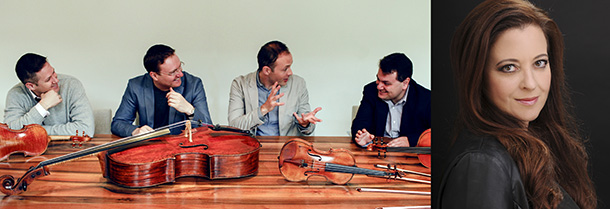
PROGRAM NOTES: JERUSALEM QUARTET AND HILA BAGGIO
Yiddish – A new viewpoint When we were approached by harmonia mundi to think of a concept for a ‘different’ album, an album that would challenge our standard repertoire, we took great care to find a subject that we had a natural connection with, but that would be interesting for the general public. Naturally we…
-

PROGRAM NOTES: NICOLAS ALTSTAEDT
Henri Dutilleux Trois strophes sur le nom de Sacher Swiss conductor Paul Sacher (1906-1999), founder of the Basel Chamber Orchestra, was an immensely important figure in 20th-century music. With a family fortune based on a controlling share of the Hoffman-LaRoche pharmaceutical empire, he commissioned works from some of the century’s greatest composers. These commissioned works…
-

PROGRAM NOTES: EVGENY KISSIN
Johann Sebastian Bach Toccata and Fugue in D minor BWV 565 (arr. Tausig) While keyboard transcription and political debate might at first blush seem to be radically different fields of endeavour, one justly famous incident on American television stands emblematic of the risks run, in both disciplines, for those who would engage in rhetorical posturing.…
-
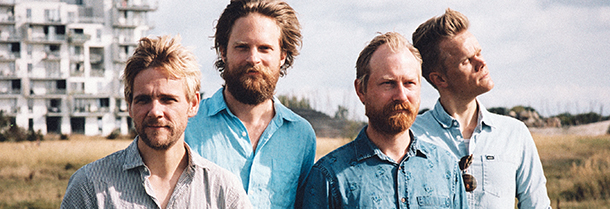
PROGRAM NOTES: DANISH STRING QUARTET II
Franz Schubert String Quartet No. 14 in D minor D. 810 (Death and the Maiden) Schubert’s “Death and the Maiden” string quartet is a sombre work, with all four of its movements set in a minor key. It takes its name from the composer’s lied Der Tod und das Mädchen (1817) that provides the theme for…
-

PROGRAM NOTES: STEPHEN WAARTS
Claude Debussy Sonata for Violin and Piano in G minor L. 140 The sound of Debussy’s music confounded many of his contemporaries. From a tonal point of view, it floated in stasis in a world of pastel sounds that arrived at their destination more by whim than by design. How, they asked, could what he…
-
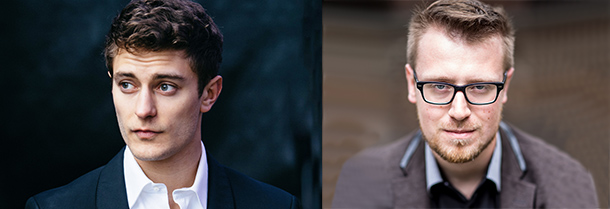
PROGRAM NOTES: JAKUB JÓZEF ORLIŃSKI
J.J. Fux Non t’amo per il ciel from Il fonte della salute, aperto dalla grazia nel Calvario Johann Joseph Fux was an early-18th-century Austrian court composer of the first rank, best known by musicians today for his widely studied treatise on Renaissance counterpoint entitled Gradus ad Parnassum (1725). The Hapsburg court in Vienna was the…
-

PROGRAM NOTES: ISATA KANNEH-MASON
Wolfgang Amadeus Mozart Sonata No. 14 in C minor K. 457 In 1785 Mozart’s Sonata in C minor was published together with the composer’s Fantasia in C minor as a single opus, with the Fantasia forming a kind of introductory ‘prelude’ to the sonata. Given that the Fantasia was composed many months after the sonata,…
-
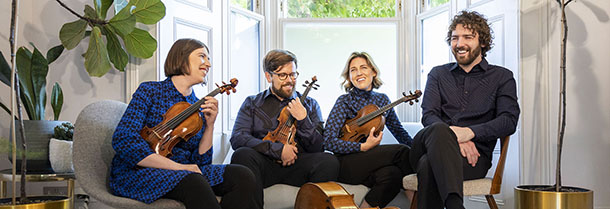
PROGRAM NOTES: CASTALIAN STRING QUARTET
Franz Joseph Haydn String Quartet in D minor Op. 76 No. 2 (“Fifths”) Haydn is known as the father of the string quartet for his leading role in transforming the genre from its origins as light entertainment into a vehicle for serious composition, worthy of standing beside the instrumental sonata and the orchestral symphony. His…
-
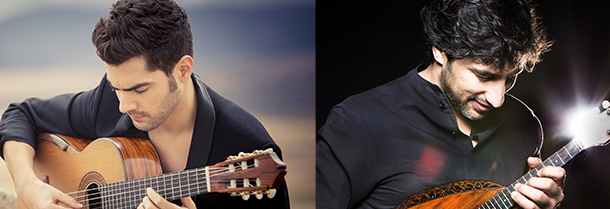
PROGRAM NOTES: MILOŠ AND AVI AVITAL
Johann Sebastian Bach English Suite No. 2 in A minor: Prelude | Well-Tempered Clavier 1: Fugue in C minor | Concerto in D minor (after Marcello): Adagio | Partita No. 2 in C minor: Capriccio In Bach’s time, the instrument closest to the sound world of the guitar and mandolin was the lute. Bach wrote…
-
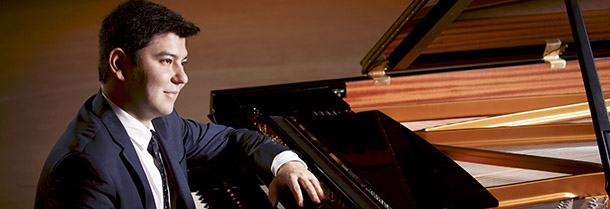
PROGRAM NOTES: BEHZOD ABDURAIMOV
Domenico Scarlatti Sonata in B minor K 27 Sonata in D major K 96 The 550-odd sonatas of Domenico Scarlatti are perhaps the most successful works to migrate from the harpsichord to the modern grand piano. Their transparent texture of simple two- and three-part keyboard writing has one foot in the imitative counterpoint of the…