

Blog Type: Program Notes
-

PROGRAM NOTES: NING FENG
Program Notes: Ning Feng Ludwig van Beethoven: Violin sonata no. 1 in D major, Op. 12, no. 1 Ludwig van Beethoven wrote his first violin sonatas, a set of three (Op. 12) in 1797-98. Six more sonatas appeared by early 1803, and one more in 1812. Although we refer to these ten works as “violin…
-

PROGRAM NOTES: AUGUSTIN HADELICH
Robert Schumann: Violin sonata No. 1 in A minor, Op. 105 Schumann wrote both of his completed sonatas for violin and piano in 1851. His wife Clara played the piano parts at their public premieres with violinists Ferdinand David (No. 1 in 1852) and Joseph Joachim (No. 2 in 1853). Though frequently recorded, these…
-

PROGRAM NOTES: MILOŠ KARADAGLIĆ
Bach: Suite in C minor, BWV 997, for lute In most catalogues of the complete works of Johann Sebastian Bach (1685-1750), one learns that the composer wrote four suites for the lute, all dating from widely separated time periods, plus miscellaneous other pieces. However, recent scholarship has determined that in fact Bach did not…
-

PROGRAM NOTES: NAREK HAKHNAZARYAN
César Franck: Sonata in A major For most of his life, Franck led a relatively quiet existence as an organist and pedagogue, emerging from obscurity as a composer only near the end of his life. His only violin sonata (which has also been arranged for numerous other instruments, notably flute, viola and cello) was created…
-
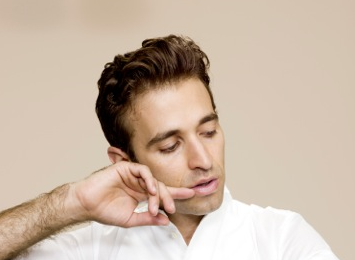
PROGRAM NOTES: ANTHONY ROTH COSTANZO
Henri Duparc was, with Berlioz and Fauré, among the pioneers of la mélodie (the French art song, as distinguished from folk song). His career was remarkable in that although he lived for 85 years, his reputation rests on barely more than a dozen songs. “Chanson triste” was Duparc’s first song, written at the age…
-
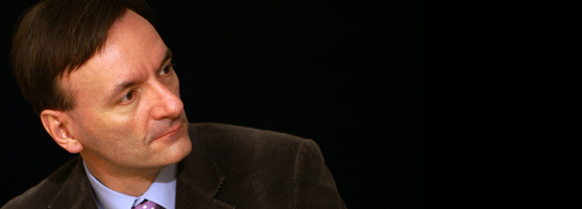
PROGRAM NOTES: STEPHEN HOUGH
Frédéric Chopin: Nocturnes, Op. 27 The nocturnes are Chopin’s most intimate and personal utterances. Some are wistful, some reflective, some melancholy, some faintly troubled and some serenely joyful. All are sensuously beautiful, suffused with elegance and deeply poetic impulses. During Chopin’s lifetime they were his most popular pieces. Twenty-one survive, the first written when…
-
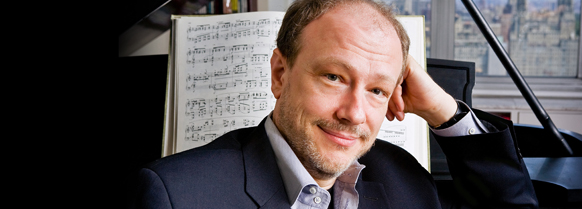
PROGRAM NOTES: MARC-ANDRÉ HAMELIN
Alban Berg: Piano sonata, Op. 1 “Among the most auspicious Opus Ones ever written,” was Glenn Gould’s assessment of Alban Berg’s piano sonata. Berg wrote this work in 1907-08 while studying with Arnold Schönberg. Originally it was intended to have three movements but, after completing the first, Berg found that “for a long time nothing…
-
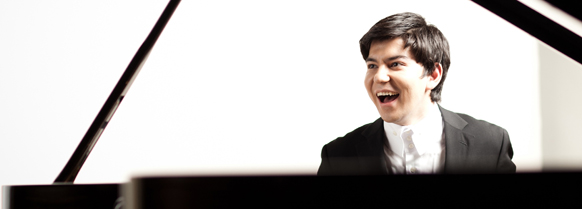
PROGRAM NOTES: BEHZOD ABDURAIMOV
Franz Schubert: Piano sonata in A major, D. 664 (Op. 120) Scholars lack definite evidence for the date and place of composition of Schubert’s early A major sonata, but most are willing to grant that most likely he wrote it during the summer of 1819 while vacationing in Steyr in Upper Austria. He wrote to…
-
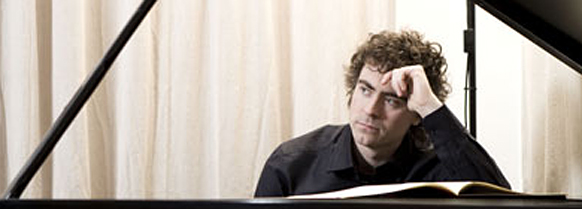
PROGRAM NOTES: PAUL LEWIS
Paul Lewis performs the Late Schubert Sonatas The year of Schubert’s death, 1828, saw the birth of an extraordinary number of masterpieces from the pen of this master lyricist: the “Great” C major Symphony, the Mass in E-flat, the String Quintet in C, thirteen of his finest songs, and the final trilogy of great…
-
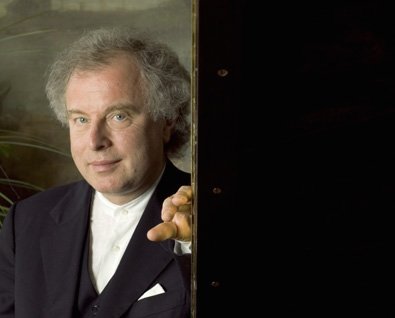
PROGRAM NOTES: ANDRAS SCHIFF PERFORMS BACH
J. S. Bach: Well-Tempered Clavier One of the monumental landmarks in the history of music, Bach’s Well-tempered Clavier (the WTC for short) has come to represent the “Old Testament” of the pianist’s repertory (Hans von Bülow) and his “daily bread” (Robert Schumann). “For more than 250 years,” states Davitt Moroney, “Das wohltemperierte Clavier has…
-
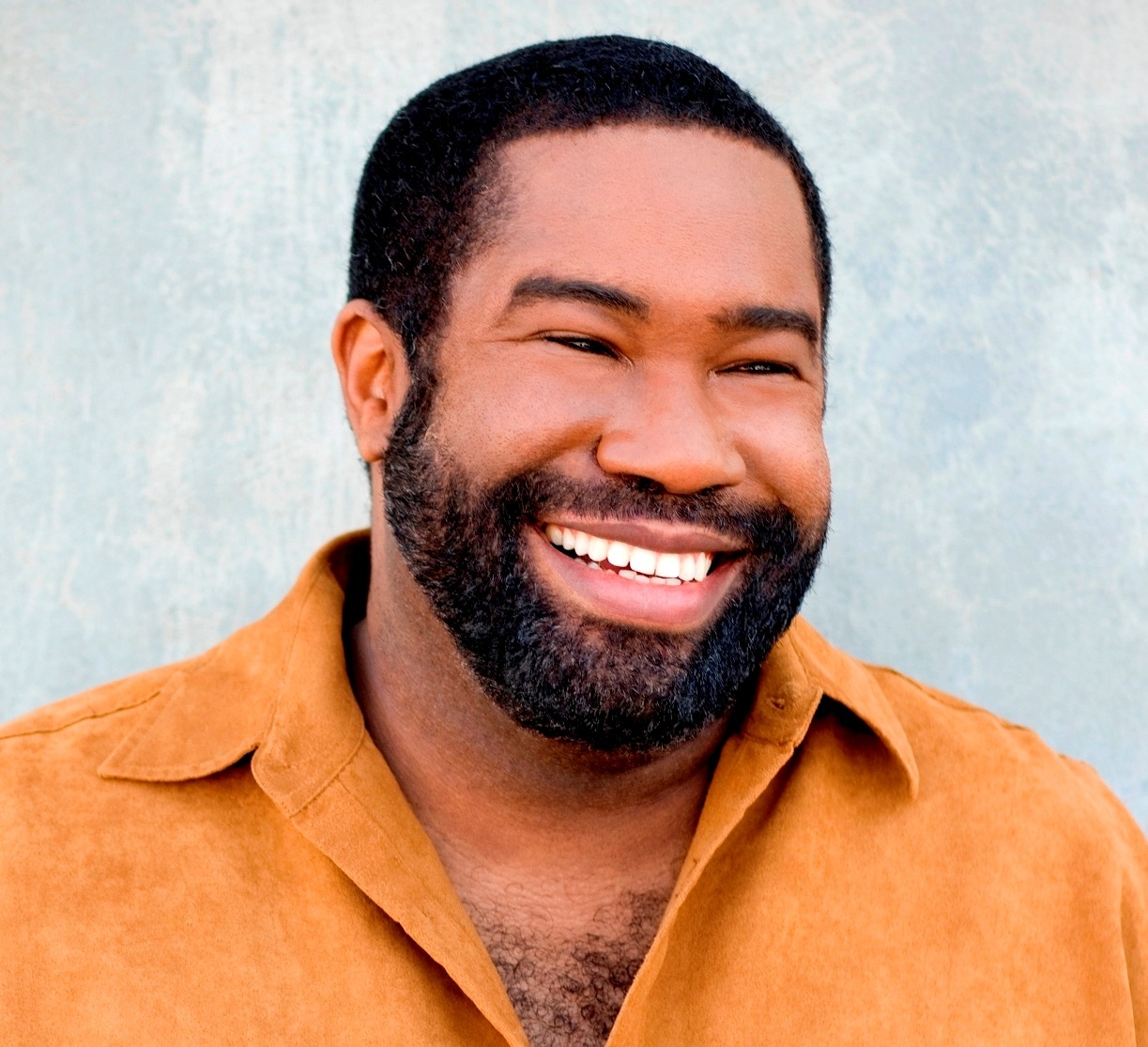
PROGRAM NOTES: ERIC OWENS, BASS-BARITONE
Eric Owens’ recital divides neatly into two halves – a German half and a French half, with the final song a true rarity that bridges the geographical and cultural divide. The German songs (Lieder) all tend to be of a dark, serious or melancholic nature, while the French songs (mélodies) are lighter, even airy and…
-
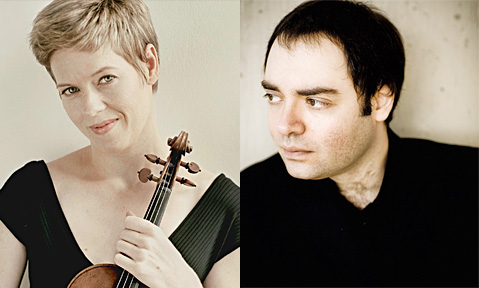
PROGRAM NOTES: THE BEETHOVEN PROJECT
Ludwig van Beethoven The Ten Violin Sonatas Beethoven wrote his first violin sonatas, a set of three (Op. 12) in 1797-98. Six more appeared by early 1803, making a fairly compressed time span for a medium in which Beethoven was to write just one more in 1812. All but the tenth were written before the…
-
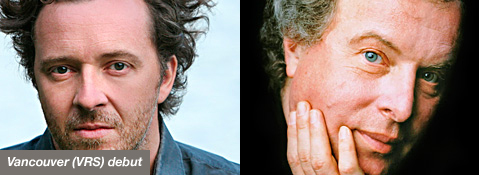
PROGRAM NOTES: CHRISTIAN GERHAHER AND ANDRÁS SCHIFF
Ludwig van Beethoven An die ferne Geliebte Adelaide, Op. 46 An die ferne Geliebte, composed in 1816, stands proudly at the beginning of Christian Gerhaher’s recital as the first important song cycle from any composer, that is, a series of songs in which the constituent numbers are linked together by a theme or narrative of…
-
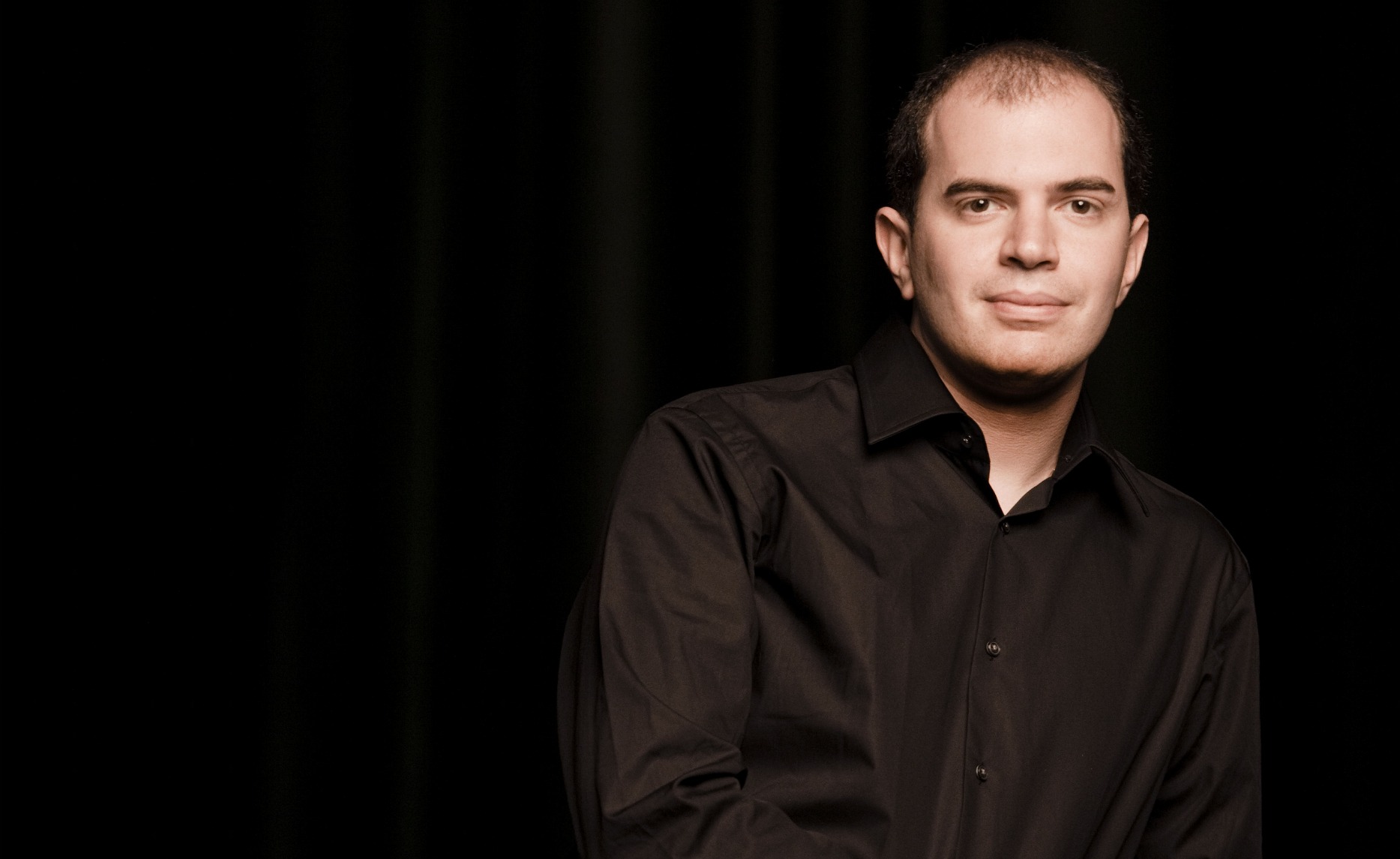
PROGRAM NOTES: KIRILL GERSTEIN
Johann Sebastian Bach English Suite no. 6 in D minor, BWV 811 Bach’s Partitas, English Suites and French Suites – six of each – collectively rank among the glories of the keyboard literature. Each is a four-part sequence of dance movements, all in the same key but varied by rhythm, tempo and mood: Allemande, Courante,…
-
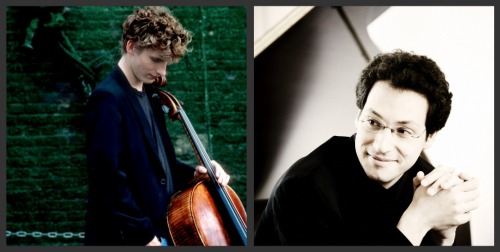
PROGRAM NOTES: ANDREAS BRANTELID & SHAI WOSNER
Claude Debussy: Sonata for Cello and Piano Few works of Claude Debussy (1862-1918) bear generic titles like symphony, quartet, concerto or sonata. Most have descriptive or evocative titles like Printemps, Jeux, Claire de lune, La mer, Nocturnes or Ibéria. Since chamber music tends, more than any other, to rely on the traditional forms of classical…
-
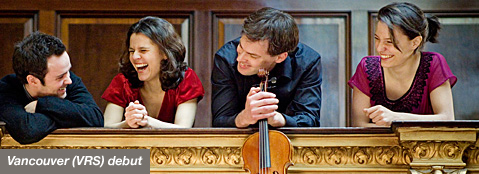
PROGRAM NOTES: ELIAS STRING QUARTET
Wolfgang Amadeus Mozart: String Quartet no. 18 in A major, K. 464 This is the fifth of the six “Haydn” quartets – everyone a masterpiece – that Mozart wrote in the mid-1780s. The identification with Haydn derives from the older composer’s direct influence on his colleague in the matter of string quartet writing. Specific elements…
-
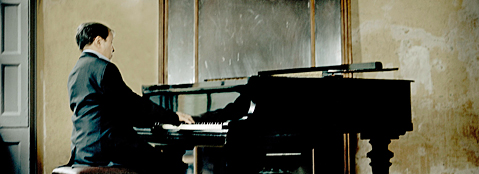
PROGRAM NOTES: MURRAY PERAHIA
J. S. Bach: French Suite no. 5 in G major, BWV 816 Bach’s Partitas, English Suites and French Suites – six of each – collectively rank among the glories of the keyboard literature. Each is a four-part sequence of dance movements, all in the same key but varied in rhythm, tempo and mood: Allemande, Courante,…
-

PROGRAM NOTES: STEVEN OSBORNE
Ludwig van Beethoven Piano Sonata (“Moonlight”) in C sharp minor, Op.27, no.2 (Sonata quasi una Fantasia) The year 1801 marked not only the dawn of a new century, but also a significant new approach on Beethoven’s part to matters of form and structure in the piano sonata. The bold use of unusual and exotic keys,…
-

PROGRAM NOTES: RODION POGOSSOV
Alessandro Stradella: “Pietà, Signore” Orphaned at the age of eleven, Alessandro Stradella went on to lead one of the most colourful lives of any composer who ever lived. He was involved in Mafiaesque schemes, had a reputation for womanizing, got himself wounded by pursuing avengers, and was eventually murdered. In between all this he found…
-
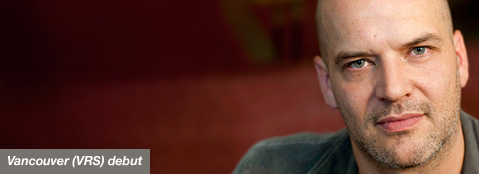
PROGRAM NOTES: FLORIAN BOESCH
A recital of Lieder set exclusively to poems of Heinrich Heine and composed solely by Schubert and Schumann is particularly apt inasmuch as Heine was born the same year as Schubert (1797) and died the same year as Schumann (1856). He was not only one of Germany’s leading romantic authors, he also wrote about travel,…
-
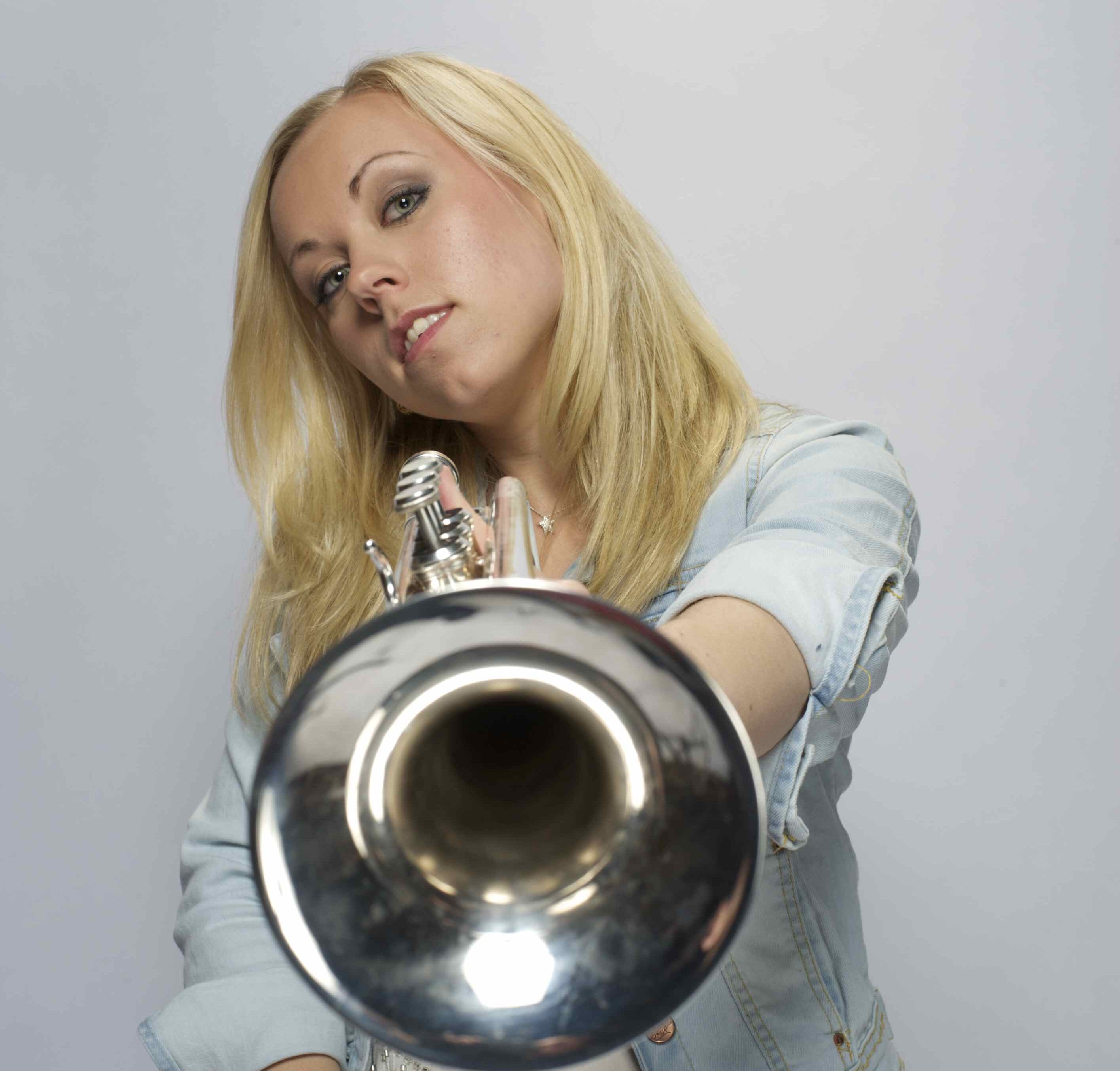
PROGRAM NOTES: TINE THING HELSETH
Tine Thing Helseth, trumpet Havard Gimse, piano Next Generation Series at The Vancouver Playhouse Sunday, February 5, 2012 Bohuslav Martinů: Sonatina for Trumpet and Piano Bohuslav Martinů followed in the footsteps of his compatriots Dvořák, Smetana, Janáček and Suk in the incorporation of elements from Bohemian and Moravian folk music into his works. Martinů was…